Blog

  • How Much will Undercarriage Rust Removal cost

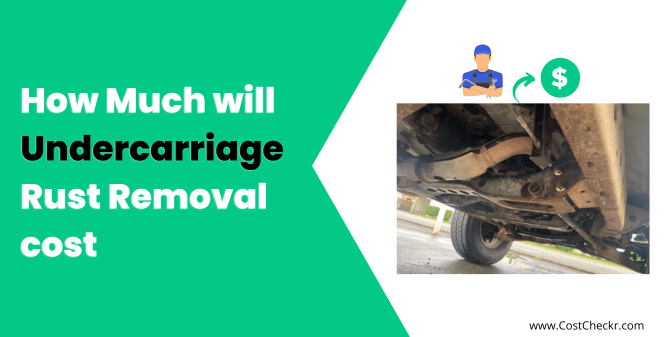
    How Much will Undercarriage Rust Removal cost

    Rust is the enemy of every car owner. It can ruin the appearance, performance, and safety of your vehicle, and it can also lower its resale value.

    Rust can form on any metal part of your vehicle, but it is especially common on the undercarriage, which is the part of the vehicle that is closest to the ground.

    The undercarriage includes the frame, suspension, exhaust system, brake lines, fuel tank, and other components that are essential for the proper functioning of your vehicle.

    Since the undercarriage is constantly exposed to moisture, salt, dirt, and debris, it can cause rust to form and spread quickly. So if you ignore the rust on your undercarriage, you are putting yourself and your vehicle at risk. Rust can cause serious problems, such as:

    • Reduced structural integrity and increased risk of breakage
    • Corrosion of electrical wires and connectors, leading to malfunctions
    • Leaks of fluids and gases, causing environmental and fire hazards
    • Increased noise and vibration, affecting the comfort and handling of the vehicle
    • Failed inspections and emissions tests, resulting in fines and penalties

    Therefore, it is important to remove the rust from your undercarriage as soon as possible, and prevent it from forming in the first place. So, how much does it cost to fix undercarriage rust?

    The cost of fixing undercarriage rust varies depending on a few factors. Since we don’t know the exact condition of your undercarriage, but we will explain these factors and how they affect the cost estimates. This will help you get a general idea of the expenses involved.

    So in this article, I’ll give you cost estimate according to each factor.

    But let me tell you one thing, the least you will have to pay is $50 to $500 for minor undercarriage rust removal, $500 to $2,000 for moderate rust removal and the max can go upto $2000 to $3500+ for severe rust removal that requires extensive repairs

    Factors that Contribute To Cost of Undercarriage Rust

    So these are the factors that I was talking about

    What kind of vehicle you have ( Vehicle Specifics )

    • Type of vehicle: Cars generally cost less than trucks, and classic cars have higher restoration costs than newer models.
    • Make and model: The availability and cost of replacement parts for specific vehicles can significantly impact the price.
    • Damage type: Rust on the frame is more expensive to repair than surface rust on other parts like floor or trunk pans.
    • Severity of damage: Small rust spots are cheaper to fix than large areas requiring extensive cutting and welding.

    How bad is the Rust:

    How much of the undercarriage is rusty? How deep is the rust? How much metal has been damaged or lost? So the rust damage can range from minor to major and can affect the cost.

    What kind of rust it is: There are different types of rust, such as surface rust, scale rust, and penetrating rust. Each type requires a different approach and level of intervention.

    Job Requirements:

    • Desired level of professionalism: DIY repairs cost less than professional restoration by auto body shops.
    • Labor availability: Areas with fewer specialists in undercarriage rust repair may have higher costs.

    Additional factors:

    • Accessibility of the rusted area: Difficult-to-reach areas require more labor and specialized tools, increasing the cost.

    The cost of undercarriage rust removal is highly dependent on a multitude of factors specific to your vehicle and desired repair level.

    If you provide me more details like the vehicle type, rust damage location and severity, I can gave you more accurate cost estimate in the comments below.

    What kind of vehicle you have

    The make, model, and year of your vehicle may affect the availability and cost of the parts and the labor. Some vehicles may have more common or cheaper parts, while others may have more rare or expensive parts.

    Some of the vehicles may also have more complex or sensitive undercarriage components, which may require more skill and care to repair.

    To give you an idea I listed some vehicle types with their estimate cost I gathered from various repair shops found online and by watching Youtube videos:

    Vehicle Type Average Cost of Undercarriage Repair
    Sedan $500 – $1,500
    SUV $700 – $2,000
    Truck $800 – $2,500
    Sports Car $1,000 – $3,000

    Severity of Rust on Undercarriage

    The severity of the rust on the undercarriage determines how much it costs to fix it. The rust can damage the metal in different ways, such as:

    • Making small spots on the surface
    • Penetrating deeper into the metal
    • Weakening the metal structure
    • Creating holes and cracks in the metal

    The table below shows the estimated costs for fixing different levels of rust damage:

    Level of damage Description Cost
    Minor Rust only on the surface,
    no structural damage
    $100 to $250
    Moderate Rust in multiple or large areas,
    some structural damage
    $300 to $800
    Extensive Rust in most or all areas,
    severe structural damage
    $850 to $2,500
    Major Rust causing holes and breakage,
    vehicle unusable, unibody rust repair,
    chassis rust repair
    $1,500 to $3,500 or more

    What Kind of Rust Is It

    The third thing that affects the cost of fixing undercarriage rust is what kind of rust it is. Different types of rust damage vehicles in different ways and need different methods of fixing. Here are the main types of rust and their features:

    Surface rust: The most common and least harmful type of rust. It only affects the top layer of metal. It happens when metal is exposed to moisture, oxygen, and salt. It does not harm the structure of the vehicle.

    It is mainly a cosmetic problem. It can be easily removed by sanding and repainting or recoating the surface.

    Scale rust: A more serious type of rust that affects deeper than the surface. It happens when metal is exposed to moisture, oxygen, and salt for a long time. It makes the metal flake and corrode, reducing its strength and durability.

    It can harm the structure of the vehicle and make it unsafe. It is harder to remove than surface rust and may need rust converter and paint or coating.

    Penetrating rust: The worst type of rust that affects the whole thickness of the metal. It happens when metal is exposed to moisture, oxygen, and salt very intensely. It makes the metal rust through and create holes and breakage.

    It can damage the structure of the vehicle very badly and make it unusable. It is very hard or impossible to remove and may need replacing the affected parts or the whole vehicle.

    Below is the price estimate mentioned for each kind of rust:

    Type of rust Cost
    Surface rust Low ($100 to $250)
    Scale rust Moderate ($300 to $800)
    Penetrating rust High ($850 to $4,000 or more)

    How Much Work Does It Take to Remove It?

    Another factor that influences the cost of fixing undercarriage rust is the amount of work required to do it. Removing the rust and restoring the undercarriage involves several steps that may take different amounts of time and effort depending on the situation. Some of these steps are:

    • Inspecting the undercarriage and assessing the extent and type of the rust damage
    • Choosing the best method of fixing the rust, such as sanding, painting, coating, converting, or replacing
    • Preparing the undercarriage and the tools and materials needed for the fix
    • Performing the fix and ensuring the quality and durability of the result
    • Cleaning up the undercarriage and the work area

    The work also depends on the skill and experience of the person who does it. A professional mechanic or body shop may charge more than a DIY enthusiast, but they may also do a better and faster job.

    The work cost may vary from $50 to $150 per hour or more, depending on the service provider and the complexity of the fix. but as I said you can expect the mechanic to tell you that they will charge ( in between $50 to $150 per hour )

    How Do You Choose to Repair It?

    Another factor that affects the cost of fixing undercarriage rust is the method of repair. Different methods have different advantages and disadvantages. They also require different tools and materials.

    I am providing you this info so when you seek to mechanic you know which kind of repair they will do for the rust, so you have the cost idea. So here are the main methods and their features:

    Sanding and painting or coating: This is the easiest and cheapest method. It works for minor to moderate rust damage. It uses a wire brush, a metal scraper, or sandpaper to remove the surface rust. Then it applies a paint or a coating to protect the metal from more rust.

    The benefits of this method are that it is quick, simple, and low-cost. The drawbacks are that it may not get rid of all the rust, it may not stop future rust, and it may not make the undercarriage look better.

    Rust converter and paint or coating: This is a more effective and durable method. It works for moderate to extensive rust damage. It uses a chemical product called rust converter to change the rust into a stable compound.

    Then it applies a paint or a coating to cover the compound and protect the metal. The benefits of this method are that it can remove deeper rust, it can prevent future rust, and it can improve the look of the undercarriage.

    The drawbacks are that it may need more preparation, it may be more toxic, and it may be more expensive.

    Replacing or welding: This is the most drastic and costly method. It works for extensive to major rust damage. It uses a cutting tool to remove the rusted parts and new parts or metal to replace them. It may also use a welding tool to join the new parts or metal to the existing ones.

    The benefits of this method are that it can remove all the rust, it can restore the strength of the vehicle, and it can make the undercarriage look like new. The drawbacks are that it may take more time, it may be more difficult, and it may be more expensive.

    For each type of Repair here is the cost estimate

    Method Cost
    Sanding and painting or coating Low ($100 to $800)
    Rust converter and paint or coating Moderate ($300 to $2,500)
    Replacing or welding High ($850 to $3,500 or more)

    How to Prevent Undercarriage Rust

    Now that you know how much it costs to fix undercarriage rust, you might be wondering how to avoid this problem in the first place. After all, you don’t want to spend your hard-earned money on something that could have been prevented, right?

    Well, the good news is that there are some simple steps you can take to prevent undercarriage rust and keep your car in great shape. Here are some of them:

    Wash your car regularly, especially after driving on wet, salty, or muddy roads. These conditions can leave behind harmful substances that can eat away at your car’s metal.

    Use a hose or a pressure washer to rinse off the undercarriage and remove any dirt, salt, or debris that can cause rust. Your car will look cleaner and shinier too.

    Apply a protective coating or an undercoating to your undercarriage. This can create a barrier between the metal and the elements, preventing rust from forming.

    You can buy a DIY kit or have it done by a professional. The cost of undercoating may be around $100 to $500, but it’s worth it in the long run. Think of it as an investment in your car’s health and longevity.

    Inspect your undercarriage periodically and look for any signs of rust. If you see any rust, act fast before it spreads and causes more damage.

    You can use the methods described above or take your car to a mechanic for professional fixing. Don’t let rust get the best of your car. Be proactive and take action.

    Avoid driving on rough or unpaved roads that can damage your undercarriage and expose the metal to rust. If you have to drive on such roads, be careful and slow down.

    Also, check your undercarriage for any scratches or dents that can allow rust to form. Drive safely and responsibly.

    By following these tips, you can prevent undercarriage rust and keep your car in tip-top shape. Your car will thank you for it. And so will your wallet.

    Undercarriage Rust Removal cost Mentioned on Forums

    While I was researching on different forums, I found that many individuals post their experiences on the cost of undercarriage rust removal.

    According to some users on Quora and Reddit, the cost can range from $100 to $1075, depending on the type and extent of the rust, the quality of the service, and the location of the shop.

    Some users suggest to do it yourself to save cost with tools and materials like a wire brush, sandpaper, rust reformer, and undercoating spray. Others recommend using professional services that offer fluid film, permanent rust proofing, or frame repair.

    However, the best way to deal with undercarriage rust is to prevent it from happening in the first place, by keeping your vehicle clean and protected from moisture and salt, I strongly recommend this too.

    Undercarriage Rust Removal cost Mentioned on Youtube

    I also explored some videos on YouTube that show how to remove undercarriage rust and how much it costs. However, I did not find any solid cost estimate on YouTube, as most of the videos were old, ranging from 3 to 10 years ago.

    The prices mentioned in the videos also varied widely, depending on the type and extent of the rust, the method and quality of the removal, and the type and size of the vehicle.

    Some videos claimed that the frame can cost as low as $50, while others said that a full sedan type car undercarriage rust removal can cost more than $1000.

    Therefore, the cost of undercarriage rust removal on YouTube is not very reliable, and it may have changed over time due to inflation and other factors.

    The Questions You might Have in your Mind ( FAQs )

    What makes my undercarriage rust? 

    Your undercarriage can rust if it gets wet, salty, dirty, or exposed to harsh chemicals. This can happen if you drive in rainy or snowy weather, live near the ocean or a humid place, park on grass or gravel, or skip regular car washes.

    How do I know if my undercarriage has rust? 

    You can check your undercarriage for rust by looking under your car or using a mirror or a camera to see the hidden areas. You can also hear if your car makes weird noises or feels shaky when you drive, or see if your exhaust system has any leaks or holes.

    Are there different kinds of undercarriage rust? 

    Yes, there are three main kinds of undercarriage rust: surface rust, scale rust, and penetrating rust. Surface rust is the easiest to fix, and it only affects the top layer of metal.

    Scale rust is harder to fix, and it makes the metal flake and crumble. Penetrating rust is the hardest to fix, and it happens when the metal is completely eaten away, creating gaps and cracks.

    Can I fix my undercarriage rust by myself? 

    You may be able to fix some undercarriage rust by yourself, if you have the right tools, skills, and safety measures. You will need to remove the rust by sanding, grinding, or cutting the rusty area, and then apply a primer, paint, and coating to cover and protect the metal.

    However, if the rust is too deep or too wide, or if it affects important parts of your car, you should get professional help and take your car to professional rust repairing service.

    How long will it take to fix my undercarriage rust? 

    The time it takes to fix your undercarriage rust depends on how much and how complex the work is, and how fast you can get the parts and services you need.

    A simple rust removal and repainting may take you a few hours, while a major rust repair or replacement may take you several days or weeks.

    Will my warranty cover my undercarriage rust? 

    Probably not. Most warranties only cover rust that makes a hole in the metal, not rust that just makes the metal look bad.

    And even then, they only cover rust that is caused by a defect in the car, not rust that is caused by your driving or parking habits. However, some car makers may offer extra or special warranties that cover rust prevention or repair.

    Which cars are more likely to get undercarriage rust? 

    Some cars are more likely to get undercarriage rust than others, depending on how they are made, what they are made of, how good they are, and how you use them.

    Generally, older cars, lower cars, cars that are driven in harsh environments, and cars that are not well maintained are more prone to undercarriage rust. Some specific models that have had undercarriage rust problems include the Ford F-150, the Toyota Tacoma, and the Jeep Wrangler.

    My Final Say on Undercarriage Rust Removal Price

    To sum up this cost guide, I want to say that even if you are low on money and the prices seem high, you should still fix your rust problems because they can be very risky and your safety is more important. As for the price, you can expect to pay anywhere from $100 to $5,000 

  • Tomb of the Unknown Soldier Guard Salary

    Tomb of the Unknown Soldier Guard Salary

    Have you ever wondered how much the soldiers who guard the Tomb of the Unknown Soldier earn? The Tomb of the Unknown Soldier is a sacred monument that honors the fallen heroes of the United States who could not be identified.

    Located at Arlington National Cemetery, It is guarded by a select group of soldiers from the 3rd US Infantry Regiment, also known as the Old Guard. These soldiers are called Tomb Sentinels, and they perform a solemn and precise ceremony every hour of every day, regardless of the weather or the situation.

    But how much do these Tomb Sentinels earn for their service? What are the requirements and the training process to become one of them? And what are the benefits and challenges of guarding the Tomb of the Unknown Soldier?

    In this blog post, I will answer these questions with facts and figures from reliable sources.

    How Much Do Tomb Sentinels Earn?

    You might think that the Tomb Sentinels get paid a lot for their hard work and sacrifice. But the truth is, their salary is not that different from other soldiers in the Army.

    According to the official website of the Old Guard, the Tomb of the Unknown Soldier Guard Salary is based on the rank and time in service of the soldier. The average rank of a Tomb Sentinel is E-5 (Sergeant), and the average time in service is 3 years.

    The salary of a Tomb Sentinel depends on their rank and their years of service in the Army. According to the 2024 military pay chart, the basic pay for an E-4 (Specialist or Corporal) with less than two years of service is $2,262.60 per month, while the basic pay for an E-6 (Staff Sergeant) with over six years of service is $3,306.90 per month.

    However, this is not the only source of income for a Tomb Sentinel. They also receive:

    • Basic Allowance for Housing (BAH), which varies depending on the location and the family status of the soldier. For example, the BAH for a single E-4 in Arlington, VA is $2,067 per month, while the BAH for a married E-6 in Arlington, VA is $2,664 per month.
    • Basic Allowance for Subsistence (BAS), which is a fixed amount of $386.50 per month for enlisted soldiers.
    • Special Duty Assignment Pay (SDAP), which is an additional pay for soldiers who perform duties that are extremely difficult, demanding, or involve an unusual degree of responsibility. The SDAP for a Tomb Sentinel is $300 per month.
    • Clothing Allowance, which is a yearly amount of $444.72 for enlisted soldiers to replace and maintain their uniforms.

    Therefore, the total monthly income for a Tomb Sentinel can range from $4,500 to $6,000 and $54,000 to $72,000 annually, depending on their rank and their situation. This does not include other possible benefits, such as health care, education, retirement, and tax advantages.

    The Benefits and Perks of Being a Tomb Guard

    The role of a Tomb Guard at the Tomb of the Unknown Soldier goes beyond monetary compensation. There are several benefits and perks associated with this prestigious position that enrich the lives of the guards.

    One significant intangible benefit of being a Tomb Guard is the sense of pride and honor that comes with representing the fallen soldiers and preserving their memory. These guards are entrusted with a sacred duty that carries great weight and significance.

    They become part of a tradition of deep respect and reverence that has been upheld for decades. Additionally, serving as a Tomb Guard provides unique opportunities for personal and professional development.

    The rigorous training and demanding standards required to fulfill this role instill qualities such as discipline, resilience, and attention to detail. These skills are not only valuable in the military but also transferable to other areas of life.

    Furthermore, the bonds formed among the guards are lasting and profound. Working closely together, they develop a strong camaraderie and sense of brotherhood.

    The shared experience of guarding the Tomb of the Unknown Soldier creates a unique connection that transcends the boundaries of rank and service.

    Other benefits:

    • Being part of a tradition that dates back to 1921, and honoring the sacrifice of the unknown soldiers and their families.
    • Being recognized and respected by the public, the military, and the government for their service.
    • Having the opportunity to meet and interact with dignitaries, celebrities, and veterans who visit the Tomb of the Unknown Soldier.
    • Having the opportunity to advance their career and education, as many Tomb Sentinels go on to become leaders and instructors in the military or pursue higher degrees in civilian life.

    What are the Requirements and Training to Become a Tomb Sentinel?

    You might think that anyone can become a Tomb Sentinel, as long as they are willing to do it. But the truth is, becoming a Tomb Sentinel is one of the most difficult and demanding tasks in the Army.

    To become a Tomb Sentinel, a soldier must meet several requirements and undergo a rigorous training program. Some of the requirements are:

    • Be a volunteer from the Old Guard.
    • Be between 5 feet 10 inches and 6 feet 4 inches tall for males, or 5 feet 8 inches and 6 feet 2 inches tall for females.
    • Have a clean military record, with no Article 15s or court martials.
    • Pass a physical fitness test, a height and weight screening, and a drug test.
    • Commit to serve at the Tomb of the Unknown Soldier for at least 18 months.

    Also Read: How Much Does Dry Cleaning Cost of Different Dresses

    The training program consists of four phases, each lasting about a month. The phases are:

    Phase 1:

    Learn the history of the Tomb of the Unknown Soldier and Arlington National Cemetery, memorize the names and locations of the 300 Medal of Honor recipients buried in the cemetery, and study the general orders and standards of the Tomb Guard.

    Phase 2:

    Learn the manual of arms, the 21-step walk, the changing of the guard ceremony, and the uniform preparation. Practice for hours on the mat, and pass several inspections and tests.

    Phase 3:

    Learn the outside performance, which includes the wreath-laying ceremony, the request to visit the Tomb, and the response to visitors. Perform several walks on the plaza, and pass more inspections and tests.

    Phase 4:

    Perform the guard duty under the supervision of a senior Tomb Sentinel. Complete a final test, which consists of a written exam, an oral exam, a uniform inspection, and a performance test. Earn the Tomb of the Unknown Soldier Guard Identification Badge.

    Some More Questions You Might Have

    What is the Tomb of the Unknown Soldier?

    The Tomb of the Unknown Soldier is a place where we remember and honor the soldiers who gave their lives for our country, but we don’t know their names or where they came from. They fought in World War I, World War II, and the Korean War.

    The tomb is in Arlington National Cemetery, and it has been guarded by the 3rd U.S. Infantry Regiment, also called The Old Guard, since 1948.

    How much money do the guards at the Tomb of the Unknown Soldier make?

    The guards at the Tomb of the Unknown Soldier get paid the same as any other soldier in the U.S. Army, based on their rank and how long they have been in the service.

    But they also get some extra money for doing this special duty, such as extra pay for working in hard conditions, extra money for buying and maintaining their uniforms, and extra money for living in or near Washington, DC. 

    The exact amount of money they make depends on many things, but it can be anywhere from $55,000 to $70,000 a year.

    What do the guards at the Tomb of the Unknown Soldier do?

    The guards at the Tomb of the Unknown Soldier do one thing: they guard the tomb. They do this every day and every night, no matter what the weather is like. They walk back and forth on a black mat in front of the tomb, following a special pattern of 21 steps, 21 seconds, and 21-gun salute.

    These numbers mean the highest respect and honor for the unknown soldiers. They also change the guard every half hour during the day and every hour at night, in a very formal and respectful way.

    They also take part in ceremonies where they lay wreaths on the tomb or welcome important visitors to the tomb. They always act with the highest standards of appearance, conduct, and performance.

    How do the guards take turns? Do they work for 8 hours straight?

    No, they don’t work for 8 hours straight. They work in teams of three, and each team has a different schedule. They work for one day, then rest for one day, then work for another day, then rest for four days.

    But even when they are not working, they have to get ready for the next shift. They have to make sure their uniform is perfect, practice their skills, and get their hair cut.

    Why do the guards wet their gloves?

    They wet their gloves to make it easier to hold the rifle. The rifle is very important for the guard, because it shows respect and protection for the unknowns.

    My Final Say

    The Tomb of the Unknown Soldier Guard Salary is not the main motivation for the soldiers who choose to become Tomb Sentinels. They do it for the honor, the pride, and the duty of guarding the unknowns who gave their lives for their country.

    They do it for the challenge, the growth, and the achievement of becoming the best of the best. They do it for the legacy, the history, and the future of preserving the sacred monument that symbolizes the values and ideals of the United States.

    If you are considering a career as a Tomb Guard, I encourage you to continue your research and reach out to more relevant channels for more information since this post is mainly about the salary of Tomb of the Unknown Soldier Guard.

    The journey may be challenging, but the rewards are immeasurable. Join the ranks of those who honor the fallen and become a part of a tradition that will forever be etched in history.

    Thank you for reading this blog post. I hope you found it informative and interesting. If you have any questions or comments, please feel free to leave them below.

    I would love to hear from you. And remember, the Tomb of the Unknown Soldier is not just a monument, it is a symbol of the nation.

  • How Much Does it Cost to Print at UPS

    How Much Does it Cost to Print at UPS

    Printing documents, flyers, posters, and other materials is a common need for many people, whether for personal or professional purposes. But where can you get high-quality prints at a reasonable price?

    One option is to print at UPS, the global shipping and logistics company that also offers a range of printing services at its stores. It can assist you with all your printing needs, whether you need to print business documents, make copies, create your own cards, or scan your files.

    But how much does it actually cost to print at UPS? and I know you are only here to understand the cost associated with printing at UPS.

    So in this article, I will give you an overview of the pricing and options for printing at UPS which will help you make informed decision and manage your printing budget effectively.

    Before you know the prices, you might be interested in knowing what printing services UPS store provide.

    Printing Services at The UPS Store

    Printing Services at The UPS Store

    The UPS Store is not just a place where you can ship your packages. It is also a place where you can print almost anything you want. They offer a wide variety of printing and finishing services, such as:

    • Black and white or full-color digital printing
    • Double-sided or single-sided printing
    • Variety of paper sizes and types
    • Optional finishing such as laminating, binding, and folding
    • Online printing and document upload
    • Graphic design assistance
    • Scanning and electronic file conversion

    Other Printing Options

    Besides making copies, The UPS Store also offers other printing options for your personal or professional needs. For example, you can print:

    • Business cards
    • Flyers
    • Brochures
    • Posters
    • Banners
    • Invitations
    • Calendars
    • Booklets
    • Manuals
    • Newsletters
    • And more

    Printing Costs at UPS

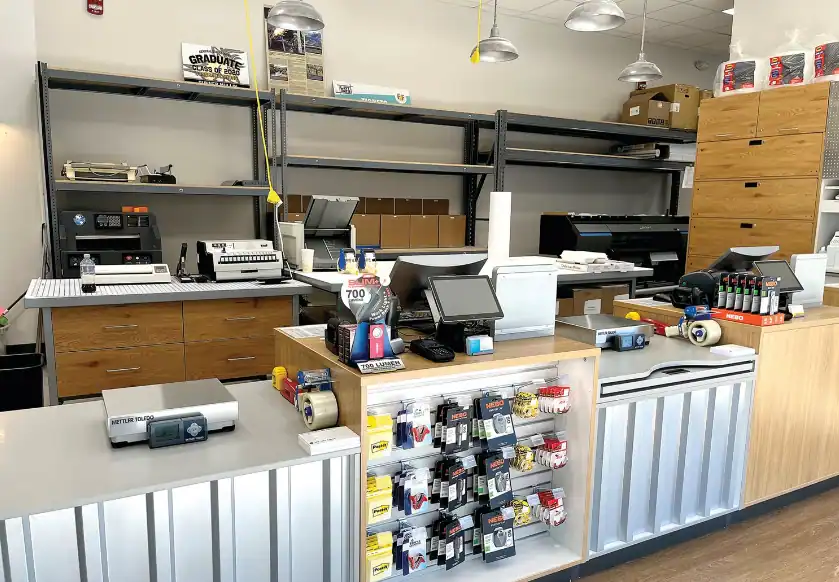
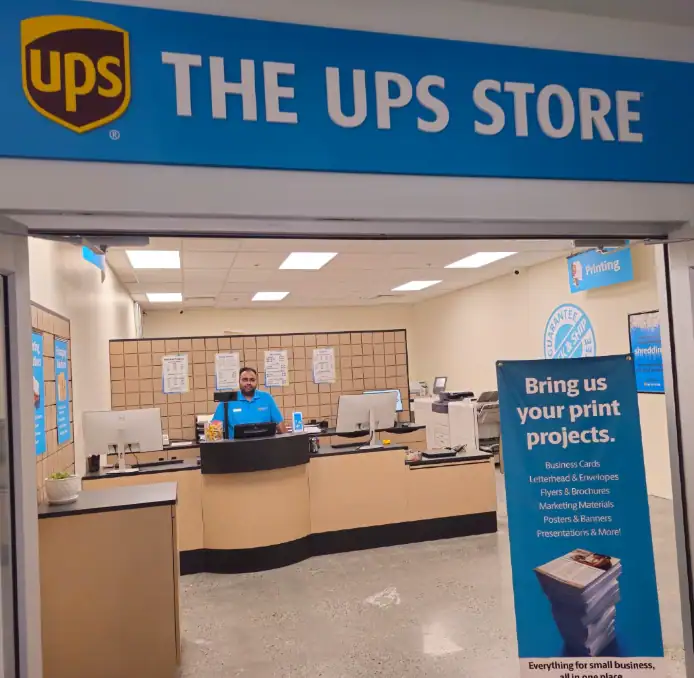
    UPS print store

    One of the most common and simple printing services at The UPS Store is making copies. The cost of printing at UPS is between $0.09 and $0.29 per page for black and white prints, and between $0.59 and $1.09 per page for color copies. These costs can vary depending on few factors such as:

    • The size of the paper
    • The number of copies
    • The type of print job
    • The additional services you may need

    Let me break it down for you.

    The Size of the Paper:

    The most common paper size is the standard letter-sized paper (8.5″ x 11″). This is what you usually use for printing documents, resumes, flyers, etc. The UPS Store charges between $0.09 and $0.29 per page for black and white prints, and between $0.59 and $1.09 per page for color prints.

    But what if you need a different paper size? Maybe you want to print a legal document (8.5″ x 14″) or a poster (11″ x 17″). In that case, you will have to pay more. The UPS Store doesn’t list the prices for these paper sizes on their website, so you will have to ask them for a quote, while I have got them for you.

    Paper Size Black and White Color
    Letter (8.5 x 11 inches) $0.09 $0.59
    Legal (8.5 x 14 inches) $0.11 $0.69
    Tabloid (11 x 17 inches) $0.19 $1.09

    The Number of Copies

    The more copies you need, the more you will have to pay. That’s obvious, right? But there is a catch. The UPS Store offers volume discounts for large orders. That means you can save money if you print more copies at once.

    For example, if you print 100 copies of a black and white document, you will pay $0.09 per page. But if you print 500 copies, you will pay only $0.07 per page. That’s a 22% saving!

    So, if you know you will need a lot of copies, it might be a good idea to print them all at once and take advantage of the volume discounts.

    Number of Copies Black and White Prints Color Prints
    100 $0.09 per page $0.59 per page
    500 $0.07 per page $0.57 per page
    1000 $0.06 per page $0.55 per page

    You can see that the price per page decreases as the number of copies increases, due to the volume discounts offered by the UPS Store. 

    The Type of Print Job

    The type of print job also affects the cost of printing at UPS. For example, if you want to print a flyer, a brochure, a poster, a banner, or a booklet, you will have to pay more than if you just want to print a simple document.

    Why? Because these print jobs require more ink, paper, and equipment. They also take more time and skill to produce.

    Print Job Black and White Prints Color Prints
    Document $0.09 – $0.29 per page $0.59 – $1.09 per page
    Flyer $0.39 – $0.99 per page $0.89 – $1.49 per page
    Brochure $0.49 – $1.19 per page $0.99 – $1.69 per page
    Poster $7.99 – $15.99 each $11.99 – $19.99 each
    Banner $19.99 – $39.99 each $24.99 – $44.99 each
    Booklet $1.49 – $2.99 each $2.49 – $3.99 each

    You can also choose from different paper stocks, such as cardstock, resume paper, and recycled paper. Each option has a different price, so you will have to check with The UPS Store to find out the exact cost of your print job.

    The Additional Services You May Need

    Sometimes, printing is not enough. You may also need some additional services, such as:

    • Binding
    • Laminating
    • Cutting
    • Folding
    • Collating
    • Stapling
    • Hole Punching
    Service Price
    Binding $1.99 – $4.99 per book
    Laminating $0.99 – $2.99 per page
    Cutting $0.25 per cut
    Folding $0.02 per page
    Collating $0.01 per page
    Stapling $0.02 per staple
    Hole Punching $0.05 per hole

    These services can add to the total cost of your print job, depending on the complexity and quantity of your project.

    For example, if you want to print a 20-page report and bind it with a spiral binding, you will have to pay an extra $3.49 for the binding service. If you want to laminate your prints, you will have to pay an extra $0.99 to $2.99 per page, depending on the size of the paper.

    These services can make your prints look more professional and durable, but they are not always necessary. So, before you decide to use them, think about whether you really need them or not.

    Note: Did you know that you can get great discounts at The UPS Store if you are a member of AAA or AARP Just show your card at any of the over 5,000 stores across the country and you will get 5% off on shipping, whether it’s domestic or international.

    Additional fees and charges to consider

    In addition to the base cost of printing services, it’s essential to consider any additional fees or charges that may apply when printing at UPS. These fees can vary depending on the specific requirements of your print job.

    One common additional charge to be aware of is the cost of paper or other printing materials. UPS offers a variety of paper options, from standard to specialty stocks, and each type may have a different price associated with it. Make sure to inquire about the cost of the paper before finalizing your print order.

    Another potential fee is for design or file setup. If you need assistance with designing your print materials or require help with formatting your files, UPS may charge an additional fee for these services.

    Lastly, expedited printing or shipping may incur extra charges. If you’re working with tight deadlines or require overnight delivery, be prepared for additional costs to ensure your materials are printed and delivered promptly.

    By considering these additional fees and charges, you can accurately assess the overall cost of printing at UPS and make informed decisions based on your budget and printing needs.

    Some Question You Might Have: FAQs

    How do I know how much it will cost to print at UPS?

    You can get a price quote for your print job by bringing in your documents or calling on the phone and using the professional quoting tool at UPS

    Can I print online at UPS?

    Yes, you can print online at UPS by uploading your documents to UPS store website and selecting your printing options. You can then pick up your print job at your nearest UPS store or have it shipped or delivered to you.

    Will UPS print label for free?

    Even though UPS does not charge you for printing your label, you still have to cover the cost of your package’s shipping and any extra services you choose.

    How long will it take to complete my print job at UPS?

    The completion time of your print job will depend on the complexity and quantity of your print job, as well as the availability of the printing equipment and staff at your local UPS store. You can contact your neighborhood location to find out the estimated turnaround time for your print job .

    Wrapping Up

    Printing at UPS can be a great way to get high-quality prints at a reasonable price. The best thing about The UPS Store is that they use a professional quoting tool to estimate the cost of every print job.

    This means that you can get a clear and accurate quote before you print anything. You can get a quote by bringing in your job or calling on the phone and telling them the details of your print project.

    You can also use the online printing service to upload your documents and choose your options. The UPS Store will then print and deliver your items to you or to your nearest store.

    I hope this blog post has helped you understand how much does it cost to print at UPS, still If you have any questions or comments, please feel free to leave them below. I would love to hear from you. Thanks for reading!

  • How Much do Wedding Dress Alterations Cost

    How Much do Wedding Dress Alterations Cost

    Hey, congratulations on your upcoming wedding! I’m sure you are super excited and busy with all the preparations. For your wedding, one of the most important things you need to do is to find your dream wedding dress.

    But you know what? Even if you find the perfect dress, chances are it won’t fit you perfectly right away. Since store-bought wedding dresses rarely perfectly fit upon purchase and most of the brides go through multiple fittings to get the right size and shape for their big day.

    That’s why you might need to get your wedding dress altered. After all, you want your gown to fit you like a glove and reflect your personal style. But how much does it cost to alter a wedding dress? Well, that’s what I’m here to tell you.

    I have done some research and found out the average cost of wedding dress alterations, the different types of alterations cost you might need to know and the factors that affect the cost.

    So in this article you will get to know on these topics:

    • How much do wedding dress alterations cost on average
    • Factors affecting the alteration cost
    • Two types of alteration: basic hemming and customization with their associated costs

    The Average Cost of Wedding Dress Alterations

    After doing research and visiting many forums and platforms that were discussing the cost of wedding dresses, I observed that most brides spend between $400 to $500 on wedding dress alterations on average. However, the cost can range from $200 to $700 depending on many factors.

    Factors That Affect the Cost of Wedding Dress Alterations

    When it comes to determining the cost of wedding dress alterations, there are several factors that can influence the final price. One of the main factors is the extent of the alterations needed.

    If your dress requires only minor adjustments, like hemming or taking in the sides, you can expect to pay a lower price. On the other hand, if your dress requires major alterations, such as changing the neckline or adding sleeves, the cost will likely be higher.

    Another factor that can impact the cost is the complexity of the dress. If your dress has intricate beadwork, lace, or other delicate details, it may require a more skilled and time consuming alteration process, which can drive up the cost.

    Additionally, the location of the alterations specialist can also affect the price. Alteration services in metropolitan areas or upscale bridal boutiques tend to be more expensive compared to those in smaller towns or less prestigious establishments.

    Lastly, the timeframe in which you need the alterations completed can also play a role in the cost. If you require rush alterations, expect to pay a premium price for the quick turnaround time.

    Understanding these factors can help you plan and budget accordingly for your wedding dress alterations. In the next section, I will show you specific cost ranges for different types of alterations, providing you with a better idea of what to expect when it comes to pricing.

    Also Read: How Much Does Dry Cleaning of Wedding Dress Cost

    The Types of Wedding Dress Alterations

    There are two main types of wedding dress alterations: basic hemming and customization.

    Basic Hemming

    Basic hemming is when you adjust the length and sides of the dress to make it fit your body shape and size. This is the most common and essential type of alteration, as most store-bought wedding dresses are not made to fit your exact measurements.

    The most common basic alterations are:

    Hemming the dress:

    You can shorten the dress to match your height and the shoes you will wear. This way, you can avoid tripping over your dress or showing too much of your feet.

    The average cost of hemming a wedding dress is between $70 and $280, depending on the number of layers, the type of fabric, and the amount of work involved.

    Number of layers Type of fabric Amount of work Cost range
    1 Plain Low $70 – $100
    2 Chiffon Medium $100 – $160
    3 Lace High $160 – $280

    Taking in or letting out the sides of the dress:

    You can make the dress narrower or wider to fit your bust, waist, and hips. This way, you can accentuate your curves and get enough support from your dress. The average cost of taking in or letting out the sides of the dress is between $35 and $50 per side, depending on the material and the amount of work involved.

    Material Amount of work Cost range per side
    Cotton Low $35 – $40
    Silk Medium $40 – $45
    Lace High $45 – $50

    Taking in or letting out the sides of the skirt or bodice:

    If the dress has a different size on the top and bottom, you can adjust the width of the lower or upper part of the dress separately. This way, you can balance and proportion your dress.

    The average cost of taking in or letting out the sides of the skirt or bodice is between $20 and $45 per side, depending on the material and the amount of work involved.

    Material Amount of work Cost range per side
    Cotton Low $20 – $25
    Silk Medium $25 – $30
    Lace High $30 – $35
    Satin High $35 – $40
    Tulle High $40 – $45

    Narrowing or reducing the shoulders:

    You can adjust the width of the shoulder straps or sleeves to fit your shoulders. This way, you can keep your dress in place and prevent it from slipping off. The average cost of narrowing or reducing the shoulders is between $45 and $50, depending on the material and the amount of work involved.

    Shortening the straps:

    You can adjust the length of the shoulder straps or sleeves to fit your arms. This way, you can make your dress comfortable and not too tight or loose. The average cost of shortening the straps is between $20 and $40, depending on the material and the amount of work involved.

    Customization

    Customization is when you add new elements or change existing ones to modify the appearance and style of the dress. This is the type of alteration that can make your dress more unique, comfortable, or suitable for your wedding theme.

    The most common customization alterations are:

    Adding Bra Cups:

    Enhance the bust with padding or underwire for support and shape. Cost: $20 to $30 on average, depending on cup type and size.

    Adding Straps:

    Introduce shoulder straps or sleeves to provide more coverage and support. Cost: $60 to $300 on average, varying with strap type, length, and material.

    Adding a Belt or Sash:

    Accentuate the waist with a decorative band or ribbon for contrast and flair. Cost: $30 to $45 on average, based on the type, width, and material.

    Adding a Bustle:

    Incorporate hooks, buttons, or ties to lift and secure the train post-ceremony. Cost: $25 to $300 on average, influenced by points, bustle type, and required work.

    Adding Sleeves:

    Integrate long or short sleeves for added coverage and warmth, suitable for the season and venue. Cost: $240 to $480 on average, depending on sleeve type, length, and material.

    Adjusting Sleeve Length:

    Tailor the sleeve length for proportionality, ensuring it suits your arms. Cost: $50 to $100 per side on average, depending on sleeve type, length, and material.

    Adjusting Train Length:

    Customize the length of the trailing back part for the right amount of drama and elegance. Cost: Over $300 on average, influenced by train type, length, and material.

    Modifying Back Design:

    Alter the back shape or style, adding details like a keyhole, V-shape, or lace-up for interest. Cost: Over $240 on average, depending on modification type, size, and material.

    Adjusting Neckline:

    Change the shape or style of the front for a flattering look. Cost: $50 to $75 on average, influenced by neckline type, size, and material.

    Replacing Neckline:

    Switch the neckline type for a different look and feel. Cost: Over $300 on average, based on replacement type, size, and material.

    Changing Zipper to Corset:

    Replace the zipper closure with a lace-up closure for a romantic, vintage vibe. Cost: Over $180 on average, depending on type, size, and material.

    Bead Work:

    Add, remove, or repair beads, sequins, crystals, or embellishments for a sparkling appearance. Cost: Around $35 per hour on average, depending on bead type, quantity, and quality.

    Here is the table for cost of each so you can see better:

    Customization Average Cost
    Adding bra cups $20-$30
    Adding straps $60-$300
    Adding a belt or a sash $30-$45
    Adding a bustle $25-$300
    Adding sleeves $240-$480
    Adjusting the length of sleeves $50-$100 per side
    Adjusting the length of the train Over $300
    Modifying the design of the back Over $240
    Adjusting the neckline $50-$75
    Replacing the neckline Over $300
    Changing the zipper to a corset Over $180
    Bead work Around $35 per hour

    After reading this, you should have a clearer idea of how much your dress alteration will cost. If your dress only needs basic hemming and a few customizations, you can add up the costs from the above pricing tables and get the final price.

    Final Thoughts and Considerations

    Choosing the right professional for your wedding dress alterations is a crucial step in ensuring that your dress fits you perfectly on your special day. While the cost of alterations is an important factor to consider, it should not be the sole determining factor in your decision.

    Remember, your wedding dress is a once-in-a-lifetime garment, and you deserve to have it tailored by someone who understands its importance. The expertise and precision of a reputable tailor or seamstress can make all the difference.

    So, take the time to read reviews, seek recommendations, and schedule consultations with different professionals.

    Consider their experience, pricing, and turnaround times, but also pay attention to how they communicate with you. A good professional will listen to your needs and concerns and ensure that they can meet your expectations.

    In the end, investing in quality alterations will ensure that your wedding dress fits you like a dream and makes you feel confident and beautiful on your big day.

    I hope this article has helped you with your wedding dress alterations cost. If you have any questions or feedback, please let me know in the comments below.

  • How Much Does Paint Correction Cost

    How Much Does Paint Correction Cost

    When it comes to maintaining the appearance of your car, paint correction is an essential process. Over time, your vehicle’s paint can become dull, scratched, or marred by swirl marks. Paint correction is the solution to bring back that glossy, showroom finish.

    However, many car owners are hesitant to pursue paint correction due to concerns about the cost. In this article, we will break down the factors that influence the cost of paint correction and provide you with a better understanding of what to expect when seeking this service.

    We will cover the following topics:

    • What is paint correction and why do you need it?
    • How Much Does Paint Correction Cost on Average?
    • What are the factors that affect the cost of paint correction?
    • What are the different stages of paint correction and how much do they cost?
    • How to maintain your car’s paint after paint correction?

    What is Paint Correction and Why Do You Need It?

    Paint correction is a way of making your car paint look shiny and new again. It’s not like a regular car wash or wax. It is a special service that removes the defects on your car’s paint that make it look dull, faded, or damaged.

    Some of the defects that paint correction can fix are:

    Swirl marks: These are circular scratches that are caused by washing or drying your car the wrong way. They are more visible on dark-colored cars and under direct sunlight.

    Scratches: These are deeper marks that are caused by sharp objects, such as keys, nails, or branches. They can vary in size and depth, and some may require paint touch-up or repair.

    Oxidation: This is when your car paint loses its gloss and color due to exposure to oxygen, water, and UV rays. It looks chalky or powdery. It is more common on older cars or cars that are exposed to harsh weather conditions.

    Fading: This is when your car’s paint loses its color and vibrancy due to exposure to sunlight, heat, and pollution. It makes your car look older and less attractive.

    Etching: This is when your car paint gets stained or damaged by acidic substances, such as bird droppings, bug splatter, tree sap, or brake dust. They are hard to remove with regular washing.

    Paint correction can improve the appearance and value of your car by making it look shiny, smooth, and flawless. It can also protect your car’s paint from further damage by adding a layer of sealant or coating that repels dirt, water, and UV rays.

    Average Cost of Paint Correction

    Paint correction can cost anywhere from $500 to $2500 for a typical car while $1400 is considered to be normal price for this service, however the price depends on how damaged the paint is, how good the service is, and how much the service is in demand in your area. There are also other factors too.

    So let me breakdown the cost into various factors since cost depends of various factors and there is no exact price for this service.

    Factors that Affect the Cost of Paint Correction

    👉🏽Condition of the paintwork:

    The current condition of your vehicle’s paintwork will have a significant impact on the cost. If there are minor scratches or swirl marks, it may require less time and effort to correct the paint.

    However, deeper scratches, heavy oxidation, or extensive paint damage may require more extensive correction, which can increase the cost.

    The base price is $500, so lets see the additional cost

    Condition of your car’s paint Additional cost
    Light defects +$100
    Moderate defects +$200
    Severe defects +$400

    👉🏽Size and type of the vehicle:

    The size and type of your vehicle also play a role in determining the cost of paint correction. Larger vehicles, such as trucks or SUVs, often require more time and materials to complete the correction process, leading to a higher cost.

    Similarly, luxury or exotic vehicles may also have unique paint finishes that require specialized techniques, resulting in a higher price.

    Size and type of your car Additional cost
    Small car with soft paint +$100
    Medium car with medium paint +$200
    Large car with hard paint +$300
    Truck or SUV +$500
    Luxury or Exotic Car +$1000

    👉🏽Level of correction desired:

    Another factor that affects the cost is the level of correction desired. Some car owners may opt for a less aggressive correction process to address minor imperfections, while others may want a more thorough correction to achieve a showroom-quality finish.

    The complexity and intensity of the correction process will impact the cost accordingly. I Will write in detail on this factor in next section, since this is the main factor that can influence the cost alot.

    Also Read: How Much Does Chrome Dipping Rims Cost

    👉🏽Experience and reputation of the paint correction service:

    The quality and professionalism of the paint correction service you choose will also influence the cost. A more experienced and reputable service will have more knowledge, skills, and equipment to perform a high-quality paint correction.

    Experience and reputation of the paint correction service Additional cost
    Low experience and reputation -$100
    Medium experience and reputation +$0
    High experience and reputation +$300

    👉🏽Location and demand of the paint correction service:

    The cost of paint correction can also vary depending on the location and demand of the service. Some areas may have higher or lower prices due to the cost of living, the competition, or the availability of the service.

    Location and demand of the paint correction service Additional cost
    Low cost of living and low demand -$100
    Medium cost of living and medium demand +$0
    High cost of living and high demand +$200

    The base cost of paint correction is $500, so you can add the additional costs for each factor to get the total cost for your car.

    For example, if your car has moderate defects, is a medium car with medium paint, and you choose a high experience and reputation service in a high cost of living and high demand area, the total cost would be:

    $500 + $200 + $200 + $300 + $200 = $1400

    So this way you can estimate your cost that you will have to pay for paint correction service

    👉🏽Additional services:

    Additional services, such as paint protection coatings or ceramic coatings, can also add to the overall cost. These coatings help in maintaining the corrected paintwork and provide long-lasting protection against UV rays, dirt, and other contaminants.

    While they are optional, they can be beneficial in extending the longevity of the paint correction and preserving the pristine appearance of your vehicle.

    Additional Service Average Cost
    Paint Protection Coating $200-$500
    Ceramic Coating $500-$2000
    Deep Clean & Extract Carpet/Cloth Seats $200-$350
    Clean/Restore/Seal Headlights $80-$125
    Clean Engine Bay $40-$50
    Maintenance & Restoration Wash $90-$100
    Paint Decontamination $100-$200
    Paint Jeweling $150-$300
    Paint Touch Up $50-$100

    While the cost of paint correction can vary based on these factors, it is essential to consider the expertise and reputation of the professional you choose.

    Remember, high-quality paint correction is an investment that can yield significant returns in terms of aesthetics, value, and long-term protection for your vehicle.

    Also Read: How Much Will it Cost to Wrap a Truck

    Understanding the different levels of paint correction

    When it comes to paint correction, it’s important to understand the different levels of correction that professionals offer. This knowledge will help you determine which level is suitable for your vehicle and budget. And I have discussed this factor above too.

    Paint correction is usually done in stages, depending on the desired outcome and the budget of the customer. The more stages the paint correction has, the more defects it can remove and the more gloss it can create.

    However, the more stages the paint correction has, the more expensive and time-consuming it will be. The most common stages of paint correction are:

    👉🏽Stage 1:

    This is the simplest and cheapest stage of paint correction. It involves using a mild abrasive compound and a polishing pad to remove light swirl marks and minor scratches. It can also enhance the gloss and clarity of the paint. It usually costs between $400 and $600 and takes about 4 to 6 hours to complete.

    👉🏽Stage 2:

    This is the intermediate stage of paint correction. It involves using a medium abrasive compound and a cutting pad to remove moderate swirl marks, scratches, oxidation, and etching. It can also restore the color and depth of the paint. It usually costs between $600 and $800 and takes about 6 to 8 hours to complete.

    👉🏽Stage 3:

    This is the most advanced and expensive stage of paint correction. It involves using a heavy abrasive compound and a wool pad to remove severe swirl marks, scratches, oxidation, and etching. It can also create a mirror-like shine and reflection on the paint. It usually costs between $900 and $1200 and takes about 8 to 10 hours to complete.

    Level of Correction Description Average Cost
    1-Step Single stage polish to remove minor defects and enhance gloss $400 – $600
    2-Step Two stage polish to remove moderate defects and restore shine $600 – $800
    3-Step Three stage polish to remove severe defects and achieve a flawless finish $900 – $1200

    How to Maintain Your Car Paint After Paint Correction?

    Paint correction is not a permanent solution. It can only remove or minimize the existing defects on your car’s paint, but it cannot prevent new ones from forming. To maintain your car’s paint after paint correction, you should:

    Wash your car regularly:

    Use a gentle car shampoo, a soft microfiber mitt, and a two-bucket method to wash your car. Rinse your car thoroughly and dry it with a clean microfiber towel. Avoid using harsh detergents, brushes, or automatic car washes that can scratch or swirl your paint.

    Wax or seal your car periodically:

    Apply a quality car wax or sealant to your car every 3 to 6 months to protect your paint from dirt, water, and UV rays. Wax or sealant can also enhance the shine and gloss of your paint. Follow the instructions of the product and use a foam applicator and a microfiber cloth to apply and remove it.

    Park your car in a shaded or covered area:

    Avoid parking your car under direct sunlight, heat, or rain, as they can fade, oxidize, or etch your paint. Park your car in a garage, a carport, or a shaded area whenever possible. If not, use a car cover to shield your car from the elements.

    Avoid contact with acidic substances:

    Remove any bird droppings, bug splatter, tree sap, or brake dust from your car as soon as possible, as they can stain or damage your paint. Use a spray bottle of water and a microfiber cloth to gently wipe them off. Do not rub or scrape them, as they can scratch your paint.

    Repair any dents or scratches promptly:

    If your car gets dented or scratched, take it to a professional repair shop as soon as possible, as they can worsen over time and lead to rust or corrosion. Do not attempt to fix them yourself, as you may cause more harm than good to your paint.

    Concluding this Topic

    In conclusion, I will say that finding the right balance between cost and quality is crucial when it comes to paint correction services. While it may be tempting to opt for the cheapest option, it is important to consider the long-term benefits of investing in a higher-quality service.

    A job done well can protect your car’s paintwork and increase its resale value. When you are searching for a paint correction professional, it is advisable to get multiple quotes and compare their services.

    Look for professionals with a good reputation and positive reviews. Keep in mind that the cost can vary based on factors such as the size and condition of your vehicle, the level of correction needed, and the expertise of the professional.

    I hope this guide was helpful and informative for you. If you have any questions or feedback, please let me know in the comments below.

  • How Much Does it Cost to Rent a Crane

    How Much Does it Cost to Rent a Crane

    If you have ever been involved in construction or heavy lifting projects, you know that cranes are an essential piece of equipment. Whether you need to lift and move materials, install structures, or complete other tasks that require significant lifting power, renting a crane is often the most cost-effective option.

    But how much does it actually cost to rent a crane? Well, there are a lot of things that affect how much it costs to rent a crane, like what kind of crane it is, how big it is, how long you need it, where you need it, and what extra services you need.

    In this article, I’m going to tell you everything you need to know about renting a crane, like:

    • How to rent a crane and what information you need to provide
    • The average cost of renting a crane
    • What Factors Affect the Crane Rental Cost?
    • Different types of cranes and their rental rates
    • What other costs and fees you have to pay when you rent a crane

    So after reading the guide, you will have a better understanding and estimate of what you can expect to pay.

    How to Rent a Crane

    First of all, let me tell you how you can rent a crane. There are two main ways to do it: online or offline. Online means using a national online rental network, like BigRentz, where you can search for different types of cranes in your area, compare prices and features, and book your rental online.

    Offline means using a local crane service, where you can call or visit them and get a more personalized service. They may have more availability and flexibility. However, they may also charge higher rates and have less variety of cranes.

    So to rent a crane, you will need to provide some basic information, such as:

    • The type and size of the crane you need
    • The duration of the rental
    • The location of the job site
    • The weight and dimensions of the load
    • The height and distance of the lift
    • The site conditions and accessibility
    • The permits and insurance required

    You will also need to decide whether you need an operator, a rigger, and a signal person to operate the crane safely and efficiently. Some crane rentals include these services, while others charge extra for them.

    The average cost of Renting a Crane

    Now, let’s talk about the most important question: how much does it cost to rent a crane? Well, there is no simple answer to that, because the cost depends on many factors that I will discuss in next section.

    However, the prices range from $200 to $5,000 per day, $1,000 to $15,000 per week, or $3,000 to $45,000 per month, plus installation and dismantling fees for tower cranes.

    To help you understand why the prices vary, I will break down the cost into various factors that will help you choose the right type and size of crane for your project and budget.

    For example, if you need a small crane for a small amount of work, you may wonder why the price ranges from $200 to $5,000 per day. I will explain the reasons behind this price range. So, let’s move on to the factors.

    Factors that Affect Crane Rental Costs

    As I said before when it comes to renting a crane, there are several factors that influence the overall cost. It’s important to understand these factors and how they contribute to the final price so that you can make an informed decision.

    👉🏽Type of crane:

    The type of crane you need will have a significant impact on the rental cost. Different cranes have varying specifications and capabilities, and as a result, their rental rates can vary.

    Mobile crane: These cranes are versatile and suitable for a range of construction and industrial projects. They are typically more affordable to rent compared to other types of cranes.

    Average rental rates for mobile cranes can range from $200 to $1,000 per day, depending on the size and lifting capacity.

    Mobile Crane Type Lifting Capacity Cost Per Hour Cost Per Day Cost Per Week Cost Per Month
    Small mobile crane 2.5 to 30 tons $100 to $300 $200 to $1,000 $1,000 to $3,000 $3,000 to $9,000
    Large mobile crane 40 to 400 tons $250 to $750 $1,000 to $5,000 $3,000 to $15,000 $9,000 to $45,000

    Tower crane: Tower cranes are used for tall construction projects and have high lifting capacities. Due to their size and complexity, tower cranes are more expensive to rent.

    Rental rates for tower cranes can range from $1,500 to $15,000 per week, depending on the height and weight capacity required.

    Tower Crane Type Lifting Capacity Cost Per Hour Cost Per Day Cost Per Week Cost Per Month
    Fixed tower crane 100 to 240 tons $100 to $200 $1,000 to $2,000 $1,500 to $15,000 $15,000 to $45,000
    Self-erecting tower crane 10 to 20 tons $50 to $100 $500 to $1,000 $2,500 to $5,000 $5,000 to $15,000

    Rough terrain crane: These cranes are designed for off-road projects and are equipped with large tires for improved mobility.

    Rental rates for rough terrain cranes can range from $1,000 to $4,000 per day, depending on the size and lifting capacity needed.

    Rough Terrain Crane Type Lifting Capacity Cost Per Hour Cost Per Day Cost Per Week Cost Per Month
    Small rough terrain crane 15 to 35 tons $100 to $300 $200 to $800 $1,000 to $2,500 $3,000 to $7,500
    Large rough terrain crane 40 to 80 tons $200 to $500 $500 to $1,500 $2,000 to $5,000 $6,000 to $15,000

    Crawler crane: Crawler cranes are known for their stability and ability to maneuver on rough terrain. They are often used for heavy lifting in construction projects.

    Rental rates for crawler cranes can range from $2,000 to $10,000 per day, depending on the size and lifting capacity required.

    Crawler Crane Type Lifting Capacity Cost Per Hour Cost Per Day Cost Per Week Cost Per Month
    Small crawler crane 50 to 100 tons $150 to $350 $300 to $1,000 $1,500 to $3,500 $4,500 to $10,500
    Large crawler crane 110 to 600 tons $300 to $800 $800 to $2,500 $4,000 to $10,000 $12,000 to $30,000

    👉🏽Duration of rental:

    The length of time you need the crane will also affect the price. Most rental companies offer daily, weekly, and monthly rates.

    Typically, the longer you need the crane, the lower the rate will be on a per-day basis.

    Duration of rental Price per day
    Daily $200 – $1,000
    Weekly $150 – $800
    Monthly $100 – $600

    👉🏽Distance and transport:

    If you are renting a crane that needs to be transported to your location, the distance between the crane rental company and your project site will impact the cost.

    Transportation fees, including fuel and delivery charges, are typically added to the rental price.

    Distance and transport Price per mile
    Less than 50 miles $4 – $8
    50 to 100 miles $6 – $12
    More than 100 miles $8 – $16

    👉🏽Operator fees:

    In many cases, you will need to hire an operator to operate the crane. The cost of the operator is usually an additional expense and can vary depending on factors such as experience, certifications, and the duration of their services.

    Table

    Type of Crane Operator Fee per Hour
    14-ton hydraulic crane $100 – $110
    25-tonne crane $420 per day
    35-tonne crane $1,750 per week
    100-ton hydraulic truck crane $350 – $370
    Tower crane $2,500 per week

    The operator fee may also depend on other factors, such as the location, the availability, the safety team, and the level of insurance

    Also Read: How Much Does a Dump Truck Load of Gravel Cost

    👉🏽Additional equipment:

    Depending on the requirements of your project, you may need additional equipment, such as rigging or attachments, which could increase the overall rental cost.

    Additional Equipment Description Average Cost
    Rigging The hardware and devices used to attach the load to the crane, such as slings, chains, hooks, etc. $50 to $500 per day
    Attachments The tools and accessories that enhance the crane’s functionality, such as buckets, forks, magnets, etc. $100 to $1,000 per day
    Lift plan A detailed plan that outlines the crane’s operation, including the load, the rigging, the site conditions, the safety measures, etc. $500 to $5,000 per project

    Note: All these are just average rental rates that I got by researching and can vary depending on factors such as location and demand, since this is not like a product that has fixed price but it can vary.

    Additional Costs to Consider when Renting a Crane

    When renting a crane, it’s important to take into account additional costs beyond the daily or weekly rental rates.

    Permits and insurance:

    Cranes need permits to work in public areas, like roads, sidewalks, and parks. The permits may vary depending on the local rules, the type and size of the crane, and the duration and location of the lift.

    You may also need to get insurance to cover any possible damages or liabilities caused by the crane. You should check with your crane rental company and your local authorities about the fees and paperwork involved.

    Utility lines and obstacles:

    Using a crane may require disconnecting or moving utility lines, like power, water, gas, and phone lines, to avoid problems or damage.

    You may also need to clear any obstacles, like trees, buildings, or cars, that may block the crane or the load. These tasks may cost extra and require coordination with the utility companies and the property owners.

    Lift plan and inspection:

    Before using a crane, you may need to make a lift plan, which is a document that tells you everything you need to know and do for the lift, like the crane model, the load weight and size, the lift height and distance, the site conditions and risks, and the roles and responsibilities of the staff.

    You may also need to check the crane and the load before and after the lift, to make sure they are safe and working properly. These tasks may need professional help and equipment, which may add to the crane rental cost.

    Answers to the Questions that are Asked a lot

    How is crane rental typically charged?

    Crane rental is usually charged on a daily, weekly, or monthly basis. Some companies may also offer hourly rates for shorter-term rentals. Additionally, transportation, setup, and operator fees may contribute to the overall cost.

    Are there any hidden costs associated with crane rental?

    Hidden costs may include transportation fees, operator charges, fuel costs, and any additional accessories or safety equipment required. It’s crucial to inquire about all potential charges upfront to avoid surprises.

    Are there any safety considerations that impact the rental cost?

    Yes, safety considerations can affect costs. Some projects may require additional safety features or specialized equipment, leading to higher rental fees. It’s important to discuss safety requirements with the crane rental company.

    Can I rent a crane for a short-term project?

    Yes, crane rental companies often offer short-term rentals for projects with varying durations. Whether you need a crane for a day or a few weeks, you can typically find rental options that suit your project timeline.

    Do crane rental companies provide operators, or do I need to hire one separately?

    Many crane rental companies offer trained and certified operators as part of the rental package. Operator fees are often included in the overall cost, but it’s essential to confirm this with the rental company.

    Are there any permits required for crane rental?

    Depending on your location and the type of crane being used, you may need permits for road closures, parking, or other considerations. The cost of permits is typically not included in the crane rental and should be factored into your budget.

    Wrapping up this Topic

    Renting a crane can be a great option for your construction project, as it can save you money, time, and hassle, and let you use different types of cranes for different purposes without buying it.

    Now that you have a clear understanding of the factors involved in crane rental, it’s time to make an informed decision about the cost. When comparing rental quotes from different companies, it’s essential to look beyond the initial price.

    Consider factors such as the crane’s capabilities, rental duration, additional fees, and insurance coverage. By evaluating these factors comprehensively, you can choose a crane rental option that not only fits your budget but also meets your project’s needs effectively.

    I hope this article has helped you understand how much it costs to rent a crane, and what factors affect the price. If you have any questions or comments, please feel free to leave them below. Thank you for reading! 😊

    Important Note: Please comment below with the price and type of crane you received from the rental company after reading this post and getting a quote for your work. This will help other users benefit from your experience.

  • How Much Does Dry Cleaning Cost: Prices by Clothing

    How Much Does Dry Cleaning Cost: Prices by Clothing

    Dry cleaning is a service that many people rely on to keep their clothing looking fresh and clean. Whether you have delicate garments that require special care or simply prefer the convenience of dropping off your clothes and picking them up ready to wear, dry cleaning is a trusted solution.

    Do you have clothes that need dry cleaning? If so, you might be wondering how much it costs and what factors affect the price. Understanding the factors that influence pricing can help you make informed decisions when it comes to maintaining your wardrobe.

    In this blog post, we will explore the various factors that impact dry cleaning costs and provide insight into what you can expect to pay for dry cleaning service.

    The Average Cost of Dry Cleaning

    Dry cleaning is a process of cleaning clothes without water, using chemicals and heat. It is often used for delicate, formal, or professional garments that cannot be washed normally.

    The cost of dry cleaning varies depending on the type, material, condition, and design of the clothes, as well as the location and quality of the service. In the US, the average cost of dry cleaning some common clothes are:

    Item ( Clothes ) Average Cost
    Shirt $2 to $24
    Pants $3 to $14
    Skirt $4 to $14
    Sweater $3.5 to $15
    Dress $4 to $30
    Suit $6 to $35
    Coat $10 to $50
    Comforter $20 to $40
    Tie $2.5 to $16
    Wedding dress $100 to $550
    Suede $30 to $80
    Leather $40 to $100
    Fur $50 to $150
    Cashmere $5 to $20
    Velvet $5 to $20

    👉🏽Shirt:

    Cost: $2 to $24

    Many people choose to dry clean their shirts to keep them crisp and fresh. The price of dry cleaning a shirt can vary depending on several factors.

    The type and material of the shirt are important, as some shirts are more delicate and need more care than others. For example, a silk or linen shirt will cost more to dry clean than a cotton or polyester shirt.

    The condition and design of the shirt also matter, as some shirts may have stains, odors, or damages that need extra treatment, or they may have embroidery, buttons or other embellishments that need more attention and time.

    👉🏽Pants:

    Cost: $3 to $14

    Pants are another common item that people dry clean, especially when they are part of a suit or a formal outfit. The cost of dry cleaning pants can vary depending on several factors such as the type and material of the pants, as some pants are more sensitive and need more care than others.

    For instance, a pair of wool or leather pants will cost more to dry clean than a pair of jeans or khakis. The condition and design of the pants also matter, as some pants may have stains, odors, or damages that need extra treatment, or they may have pleats, cuffs, or other features that need more work and skill.

    👉🏽Skirt:

    Cost: $4 to $14

    Skirts are often dry cleaned by women, especially when they are part of a dress or a formal outfit. The price of dry cleaning a skirt can range from $4 to $14. Some skirts are more delicate and need more care than others due to which price can increase or decrease.

    For example, a silk or wool skirt will cost more to dry clean than a cotton or polyester skirt. The condition and design of the skirt also matter, as some skirts may have stains, odors, or damages that need extra treatment, or they may have lace, sequins, or other decorations that need more attention and time.

    👉🏽Sweater:

     Cost: $3.5 to $15.

    Sweaters are commonly dry cleaned when they are made of delicate or natural fibers. The cost of dry cleaning a sweater can vary from $3.5 to $15, depending on several factors:

    For example, a cashmere or angora sweater will cost more to dry clean than a cotton or acrylic sweater. The condition and design of the sweater also matter, as some sweaters may have stains, odors, or damages that need extra treatment, or they may have patterns, buttons, or other features that need more work and skill.

    👉🏽Dress:

    Cost: $4 to $30

    Women often dry clean their dresses for formal or special occasions. Dresses made of silk or velvet are more delicate and expensive to dry clean than those made of cotton or polyester. Dresses with stains, odors, damages, beads, embroidery, or other embellishments need more care and time.

    👉🏽Suit:

    $6 to $35.

    Men often dry clean their suits for professional or formal attire. The cost of dry cleaning a suit can vary from $6 to $35 in the US, depending on several factors:

    For example, a wool or silk suit will cost more to dry clean than a cotton or polyester suit. The condition and design of the suit also matter, as some suits may have stains, odors, or damages that need extra treatment, or they may have stripes, checks, or other features that need more work and skill.

    👉🏽Coat:

    Cost: $10 to $50

    People often dry clean their coats when they are made of heavy or sensitive fabrics. The cost of dry cleaning a coat can vary from $10 to $50, depending on several factors. For example, a fur or leather coat will cost more to dry clean than a cotton or polyester coat.

    The condition and design of the coat also matter, as some coats may have stains, odors, or damages that need extra treatment, or they may have buttons, zippers, or other features that need more attention and time.

    👉🏽Comforter:

    Cost: $20 to $40

    Comforters are often dry cleaned by people, especially when they are large or bulky. The cost of dry cleaning a comforter can vary from $20 to $40 and that depends: For example, a down or silk comforter will cost more to dry clean than a cotton or polyester comforter.

    The condition and design of the comforter also matter, as some comforters may need extra treatment, or they may have patterns, buttons, or other features that need more work and skill.

    👉🏽Tie:

    Cost: $2.5 to $16

    The cost of dry cleaning a tie can vary from $2.5 to $16 , depending on several factors like the condition and design of the tie matters, as some ties may need extra treatment, or they may have patterns, logos, or other things that need more work and skill.

    👉🏽Wedding dress:

    Cost: $100 to $550

    Women often dry clean their wedding dresses for special or memorable occasions. Wedding dresses that are made of silk or lace are more delicate and expensive to dry clean than those that are made of cotton or polyester.

    Also if they need extra cleaning, deodorizing, or repairing, or that have beads, sequins, or other embellishments need more care and time. Some wedding dresses also need preservation services, which involve special packaging and storage to prevent deterioration.

    👉🏽Suede:

    $30 to $80

    Suede is a type of leather that has a soft and velvety texture. People often dry clean their suede items, such as jackets, coats, or shoes, to keep them in good condition. Suede items that are larger or more complex are more expensive to dry clean than those that are smaller or simpler.

    👉🏽Leather:

    Cost: $40 to $100

    Leather is a type of material that is made from animal skin or hide. Leather items that are larger or more complex are more costly than those that are smaller or simpler.

    👉🏽Fur:

    Cost: $50 to $150

    Fur is a type of material that is made from animal hair or fur. People often dry clean their fur items, such as jackets, coats, or hats, to keep them in good condition.

    Fur items that are larger or more complex are more pricey than those that are smaller or simpler. For example, a fur coat will cost more to dry clean than a fur jacket, which may require less solvents and time

    👉🏽Cashmere:

    Cost: $5 to $20

    Cashmere is a type of wool that is made from the hair of cashmere goats. People often dry clean their cashmere items, such as sweaters, scarves, or gloves. Cashmere items that are larger or more delicate are more expensive than those that are smaller or sturdier.

    Also Read: How Much Does it Cost to Remove Window Tint

    The Factors That Affect the Cost of Dry Cleaning

    There are several things that affect the cost of dry cleaning, such as:

    👉🏽The Type of Clothes:

    One of the most important factors that affect the cost of dry cleaning is the type of clothes that you want to clean. Some clothes need more care and attention than others, which will increase the cost For example:

    • A wedding dress may need special handling and preservation, which can cost up to $200 or more upto $550.
    • A suit may need more pressing and finishing than a shirt, which can add $5 to $10 to the price.
    • A coat or a jacket may need more solvent and time to clean than a sweater, which can add $10 to $15 to the price.

    👉🏽The Material of the Clothes:

    Another factor that affects the cost of dry cleaning is the material of the clothes that you want to clean and I have discussed this factor alot above.

    The material of the clothes basically determines the type of solvent and detergent that the dry cleaner will use, as well as the amount and the temperature. Some materials, like silk, wool, or leather, are more delicate and expensive to clean than others, like cotton, polyester, or nylon. For example:

    • Silk may need a special solvent and a low temperature to avoid damage, which can cost up to $20 per item.
    • Wool may need a gentle detergent and a low temperature to avoid shrinking, which can cost up to $15 per item.
    • Leather may need a special treatment and a high temperature to remove stains and odors, which can cost up to $50 per item.

    👉🏽The Location of the Dry Cleaner:

    Another factor that affects the cost of dry cleaning is the location of the dry cleaner that you choose. The location of the dry cleaner affects the cost of dry cleaning because of the differences in labor costs, taxes, rent, and utilities. For example:

    • Dry cleaning in New York City may be more expensive than dry cleaning in Omaha, Nebraska, because of the higher cost of living and doing business in New York City.
    • Dry cleaning in a downtown area may be more expensive than dry cleaning in a suburban area, because of the higher demand and competition in the downtown area.
    • Dry cleaning in a franchise or a chain may be more expensive than dry cleaning in an independent or a local business, because of the higher overhead and fees in the franchise or the chain.

    👉🏽The Quality of the Service:

    The last factor that affects the cost of dry cleaning is the quality of the service that the dry cleaner provides. The quality of the service depends on the reputation, experience, and equipment of the dry cleaner, as well as the skill and training of the staff.

    A high-quality dry cleaner will use the best solvents and detergents, have the latest technology and machines, and have skilled and trained staff. A low-quality dry cleaner may use cheap or outdated products, have old or faulty machines, and have unprofessional or inexperienced staff.

    Common Questions People Frequently Asks

    Here are some common questions and answers about dry cleaning:

    Why do some clothes need to be dry cleaned?

    Some clothes need to be dry cleaned because they are made of delicate, prone to shrinking, or have oil-based stains. Dry cleaning can preserve the color, brightness, and texture of these clothes and make them last longer.

    How often should I dry clean my clothes?

    The frequency of dry cleaning depends on the type of clothes, the frequency of wear, and the degree of soiling. In general, you should dry clean your clothes when they are visibly dirty, stained, or smelly. You can also follow the care label instructions on your clothes or ask your dry cleaner for advice.

    How much does dry cleaning cost?

    The cost of dry cleaning depends on the type of clothes, the location, and the quality of the service.

    On average, dry cleaning costs between $2 and $24 for a shirt, between $3 and $14 for a pair of pants, between $4 and $30 for a dress, between $6 and $35 for a suit, and between $100 and $550 for a wedding dress.

    These are just estimates, and the actual prices may vary depending on the dry cleaner you choose.

    Conclusion

    Dry cleaning is a convenient and effective way to clean your clothes and fabrics that either cannot be washed at home or are too delicate for regular laundry machines. It can also make your clothes last longer and look better.

    However, dry cleaning can also be expensive, depending on the type of clothes, the location, and the quality of the service. Therefore, you should be smart about choosing a good dry cleaner and saving money on dry cleaning.

    I hope this guide has helped you understand how much dry cleaning costs for different type of clothes. If you have any questions or comments, please feel free to leave them below. Thank you for reading.

  • How Much Does a Dump Truck Load of Gravel Cost

    How Much Does a Dump Truck Load of Gravel Cost

    One of the key factors to consider when planning any construction or landscaping project is the cost of materials. For many projects, gravel is an essential component and is used for many projects, such as landscaping, road construction, drainage, and erosion control.

    You can use gravel to make your driveway, patio, walkway, or garden look amazing. But how much does it cost to get a dump truck load of gravel delivered and spread? Well, that depends on a few things, such as:

    What kind of gravel do you want?
    How far is your project from the gravel source?
    How much gravel do you need?
    How easy or hard is it to spread the gravel?

    In this blog post, I’ll help you figure out answers to these questions and give you some average prices and estimates for different types of gravel projects and the cost of a dump truck load of gravel.

    Whether you are homeowner or a contractor, planning a DIY project or working on a large scale construction job, knowing the cost of gravel is essential for budgeting purposes. Let’s get started!

    Factors Influencing Gravel Prices

    Some of the main factors that affect gravel prices are:

    Type and quality of gravel:

    Different types of gravel have different properties and uses. For example, crushed stone is suitable for driveways and roads because it is strong and durable; pea gravel is ideal for walkways and patios because it is smooth and uniform; river rock is attractive for landscaping because it has natural colors and shapes; decorative gravel is expensive because it has unique patterns or textures.

    The quality of the gravel also affects the price. Higher quality gravel is more expensive than lower quality gravel because it has fewer impurities, more consistency, and better appearance. 

    The price difference between different types and qualities of gravel can range from $10 to $35 per ton or $15 to $54 per cubic yard.

    Different types of gravel are:

    Base gravel: Base gravel is used to form a base or foundation for a driveway or road. It has an irregular shape and provides a sturdy and permeable layer.

    Crushed stone: This type is produced by crushing larger rocks into smaller pieces. It has various sizes and shapes and is suitable for driveways, walkways, and patios.

    Pea gravel: It is small, rounded, and smooth pebbles that come in various colors. It is ideal for pathways, patios, playgrounds, and other decorative purposes.

    River rock: This type is large, smooth, and polished stones that are naturally shaped by water. It is perfect for accenting gardens, ponds, water features, and other natural settings.

    Quarry process: This type of gravel is made from crushed concrete or asphalt mixed with stone dust or sand. It has a rough texture and a gray color. It is often used as a base material for roads or foundations.

    Marble chips: Marble chips are made from natural marble stones that are cut into small pieces. It has a smooth texture and a white color with veins or patterns. It is often used as an ornamental material for driveways or walkways.

    Note: There are other kinds of gravels besides the ones I mentioned, but those are the most popular ones.

    So all these types have different prices, on average I can gave you their estimate below:

    Type of Gravel Average Cost per Ton Dump Truck Cost (15 tons)
    Base gravel $10 to $50 $150 to $750
    Crushed stone $15 to $75 $225 to $1,125
    Pea gravel $28 to $45 $420 to $675
    River rock $8.33 to $25 $125 to $375
    Quarry process $3.33 to $16.67 $50 to $250
    Marble chips $74.07 to $296.30 $1,111 to $4,445

    Quantity and delivery distance:

    The more gravel you need, the higher the price will be. The delivery distance also affects the price because it adds to the transportation cost.

    Generally, bulk gravel (purchased by the ton or cubic yard) is cheaper than bagged gravel (purchased by the bag or gallon), but it requires more space to load and unload. 

    The delivery cost can vary from $10 to $50 per ton or $15 to $75 per cubic yard, depending on how far the supplier has to travel.

    The table below shows the average costs of different quantities and delivery distances of gravel, as well as the dump truck cost for each scenario.

    Quantity and Delivery Distance Gravel Cost Dump Truck Cost (15 tons)
    1 ton of gravel delivered 10 miles $20 to $60 $300 to $900
    1 cubic yard of gravel delivered 10 miles $25 to $90 $375 to $1,350
    1 ton of gravel delivered 50 miles $60 to $300 $900 to $4,500
    1 cubic yard of gravel delivered 50 miles $75 to $450 $1,125 to $6,750

    Location and availability:

    The location of the supplier affects the price because it determines how far they have to travel to deliver the gravel. The availability of the supplier also influences the price because some types of gravel may be more scarce or in demand than others in certain areas.

    For example, river rock may be more expensive in a desert than in a forest area. The location and availability factor can add or subtract $5 to $20 per ton or $7 to $30 per cubic yard to the price of gravel .

    Table

    Location Type of Gravel Average Cost per Ton Delivery Fee per Load Delivery Fee per Mile Dump Truck Cost (15 tons)
    Arizona River rock $25 to $45 $30 to $150 $1.5 to $6 $450 to $825
    Florida Pea gravel $30 to $50 $20 to $100 $1 to $4 $470 to $850
    Georgia Crushed stone $20 to $40 $15 to $75 $0.75 to $3 $315 to $675
    Michigan Base gravel $15 to $35 $10 to $50 $0.50 to $2.5 $235 to $575
    New York Marble chips $80 to $300 $50 to $250 $2.5 to $10 $1,250 to $4,750
    Texas Quarry process $3.33 to $16.67 $40 to $200 $2 to $8 $90 to $300

    Labor and Spreading costs:

    If you need professional help to install/spread your gravel project, you will have to pay extra for labor and equipment. Labor costs depend on how complex your project is, how many workers are involved, how long it takes to complete it, and what skills they have.

    Equipment costs include renting or buying tools such as shovels, rakes, wheelbarrows, dump trucks, etc. The labor and installation costs can range from $0.50 to $1.50 per square foot or $50 to $150 per hour, depending on the scope and difficulty of the project.

    Here is the table that shows labor cost for different places:

    Location Labor and Installation Cost per Square Foot Labor and Installation Cost per Hour
    Arizona $0.75 to $1.25 $75 to $125
    Florida $0.50 to $1 $50 to $100
    Georgia $0.75 to $1.50 $75 to $150
    Michigan $0.50 to $1 $50 to $100
    New York $1 to $1.50 $100 to $150
    Texas $0.75 to $1.25 $75 to $125

    Please note that these are only average costs and may vary depending on the region, season, quality, source, availability, transportation, and installation of the gravel. The dump truck cost is calculated by multiplying the average cost per ton by 15, which is the typical capacity of a dump truck.

    Breaking it Down: Average Gravel Prices in Different Units

    If you want to know more about the pricing of gravel in terms of different units, let me show you that too.

    Per Ton:

    A ton of gravel is equal to 2,000 pounds or 907 kilograms. Gravel sold by the ton costs between $10 and $50 per ton. For instance, crushed stone is $10 to $50 per ton, while decorative gravel is $28 to $45 per ton.

    Per Cubic Yard:

    A cubic yard of gravel is equal to 27 cubic feet or 0.764 cubic meters. Gravel sold by the cubic yard costs between $15 and $75 per cubic yard. For example, crushed stone is $15 to $75 per cubic yard, while decorative gravel is $21 per cubic yard.

    Per Square Foot:

    A square foot of gravel is a measure of the area covered by gravel. Gravel used as a base material for various projects costs between $1 and $3 per square foot. For instance, pea gravel is $1 to $3 per square foot for a 4’x20’ area with 12 inches of depth.

    Per Truck Load:

    A truck load of gravel is a measure of the volume of gravel delivered by a truck. Gravel delivered by truck loads costs between $1,350 and $2,500 or more per truck load which can have upto 15 tons of gravel on average.

    For instance, a truck load of crushed stone is about $1,350 for a 12’x100’ road with 12 inches of depth.

    Type of Gravel Average Cost per Ton Average Cost per Cubic Yard Average Cost per Square Foot Average Cost per Truck Load
    Base gravel $10 to $50 $0.75 to $2.5 $1.5 to $3 $150 to $750
    Crushed stone $15 to $75 $1.25 to $4 $2.25 to $5 $225 to $1,125
    Pea gravel $28 to $45 $2.25 to $4.5 $3.75 to $6 $420 to $675
    River rock $8.33 to $25 N/A $1 to $3 $125 to $375
    Quarry process $3.33 to $16.67 N/A $0.40 to $2 $50 to $250
    Marble chips $74.07 to $296.30 N/A $2 to $8 $1,111 to $4,445

    Calculating the quantity of gravel needed for your project

    So as you are planning to use gravel for your landscaping, driveway, patio, or any other project, you also then need to know how much gravel you will need.

    A I said before a typical dump truck can carry about 15 tons of gravel, which may be more or less than what you actually need. Therefore, it is important to calculate the exact amount of gravel you will need based on the dimensions of the area you want to cover.

    In this section, I will help you estimate the quantity of gravel needed for your project. I will provide you with a table that shows how much gravel you will need for different dimensions of the area, assuming a depth of 4 inches and a density of 1.4 tons per cubic yard.

    Area (square feet) Volume (cubic yards) Weight (tons) Cost (dollars) Dump truck loads
    100 1.48 2.07 $41.4 0.14
    200 2.96 4.14 $82.8 0.28
    300 4.44 6.22 $124.4 0.41
    400 5.93 8.30 $166 0.55
    500 7.41 10.37 $207.4 0.69
    600 8.89 12.45 $248.9 0.83
    700 10.37 14.52 $290.4 0.97
    800 11.85 16.59 $331.8 1.11
    900 13.33 18.66 $373.3 1.24
    1000 14.81 20.73 $414.7 1.38

    Project Examples

    let me show you some more examples of how much it will cost for different types of projects. I’ll use the average prices from the tables above, but you can adjust them according to your specific situation.

    Walkway or Flower Bed (4’ x 20’)

    Let’s say you want to make a walkway or a flower bed with pea gravel. You need about 2 cubic yards (24 square feet) per side. Here is how much it will cost:

    Item Cost
    Gravel ($40 per cubic yard) $40 x 2 x 4 = $160
    Delivery ($0.50 per mile) $0.50 x 10 miles = $5
    Spreading ($0.50 per square foot) $0.50 x 24 square feet = $12
    Total $177

    Gravel Patio or Landscaping (10’ x 20’)

    Let’s say you want to make a patio or a landscaping with river rock. You need about 7 cubic yards (168 square feet) per side. Here is how much it will cost:

    Item Cost
    Gravel ($75 per cubic yard) $75 x 7 x 10 = $3,750
    Delivery ($0.50 per mile) $0.50 x 20 miles = $10
    Spreading ($0.50 per square foot) $0.50 x 168 square feet = $84
    Total $3,844

    Driveway (12’ x 25’)

    If you want to make a driveway with crushed stone. You need about 9 cubic yards (270 square feet) per side. Here is how much it will cost:

    Item Cost
    Gravel ($15 per cubic yard) $15 x 9 x 12 = $1,620
    Delivery ($0.50 per mile) $0.50 x 20 miles = $10
    Spreading ($0.50 per square foot) $0.50 x 270 square feet = $135
    Total $1,765

    Erosion Control (50’ x 100’)

    To make an erosion control project with limestone. You need about 50 cubic yards (4,500 square feet) per side. Here is how much it will cost:

    Item Cost
    Gravel ($25 per cubic yard) $25 x 50 x 50 = $62,500
    Delivery ($0.50 per mile) $0.50 x 50 miles = $25
    Spreading ($0.50 per square foot) $0.50 x 4,500 square feet = $2,250
    Total $64,775

    Tips to Save Money and Get the Best Value

    I hope these above examples gave you an idea of how much it will cost to get a dump truck load of gravel delivered and spread for your project. But before you order your gravel, let me give you some tips on how to save money and get the best value for your gravel project:

    Compare prices from different sources and suppliers of gravel in your area and don’t buy from the first supplier you find, go ahead and look for multiple suppliers to get a better quote.

    Order your gravel in bulk and in advance. You can save money by avoiding multiple deliveries and getting discounts for large orders. You can also avoid price fluctuations and shortages by ordering your gravel ahead. Also if you ordered 12 tons of gravel in a dump truck, and later you realized that its less, then you have to pay for another delivery which can cost you more.

    Plan your project in the off-season or when the demand for gravel is low. You can save money by taking advantage of lower prices and better availability of gravel during the winter or rainy season.

    Hire a professional contractor or landscaper to deliver and spread your gravel. They have the experience and equipment to do the job efficiently and safely. You can also save time and hassle by letting them handle the permits and regulations required for your project.

    You can also read: How Much Does it Cost to Wrap a Truck

    Some of Most Asked Questions on this Topic

    How is gravel typically priced?

    Gravel is often priced by the cubic yard or ton. The cost can vary based on the type of gravel (e.g., crushed stone, pea gravel), and prices may include delivery charges.

    What is the average cost per dump truck load of gravel?

    The average cost per dump truck load of gravel can range from $300 to $1,200 or more, depending on factors like the type of gravel, delivery distance, and regional market conditions.

    Does the type of gravel affect the cost?

    Yes, the type of gravel can significantly impact the cost. Different types of gravel, such as crushed stone, pea gravel, or river rock, may have varying costs based on their availability and the process involved in obtaining and preparing them.

    Are there additional costs beyond the gravel itself?

    Yes, additional costs may include delivery fees, taxes, and any surcharges that the supplier might apply. It’s important to inquire about these potential extra charges when obtaining price quotes.

    How does delivery distance affect the cost?

    The distance between the gravel supplier and your location can influence the cost due to transportation expenses. Longer delivery distances may result in higher delivery fees.

    Can I save money by picking up the gravel myself?

    In many cases, suppliers offer the option for customers to pick up gravel themselves, which can save on delivery fees. However, consider the logistics, as large quantities of gravel can be heavy and may require appropriate equipment for loading.

    How do I find the best deals on a dump truck load of gravel?

    To find the best deals, it’s recommended to obtain quotes from multiple local suppliers, compare prices, and consider factors such as delivery costs and the reputation of the supplier.

    What questions should I ask when getting a quote for gravel?

    When obtaining a quote, be sure to ask about the type and quality of gravel, the total cost including any additional fees, delivery options, and any discounts available for bulk purchases. Additionally, inquire about the supplier’s policies on returns or adjustments.

    Final thoughts

    Choosing the right gravel supplier is crucial to ensuring that you not only get the best quality gravel but also the best price. When making your decision, it’s important to consider a few key factors.

    Firstly, do your research and read reviews about different suppliers in your area. Look for suppliers with a good reputation for providing high quality materials and reliable service. Additionally, consider their experience in the industry and their ability to meet your specific needs.

    Secondly, compare quotes from different suppliers. While it’s important to consider the cost, don’t solely base your decision on price alone. Take into account factors such as delivery fees, any additional services they offer, and the overall value for money.

    Finally, don’t be afraid to ask questions. If there’s anything you’re unsure about, reach out to the supplier and get clarification. This will help you make an informed decision and ensure that you’re getting exactly what you need.

    Thats it! I hope you found this post helpful and informative and got know about gravel cost per dump truck. If you have any questions or feedback, please feel free to leave a comment below. Thank you for reading! 😊

  • Rear Main Seal Replacement Cost

    Rear Main Seal Replacement Cost

    If you see oil dripping from your car, especially near the back of the engine, it means that your rear main seal is worn out and needs a replacement. The rear main seal is an important part of the engine that prevents oil from leaking and keeps the engine running smoothly but it can get damaged over time.

    Many vehicle owners are curious about the cost of this repair. However, the cost of this repair can vary a lot depending on different factors such as the type of car you have, the labor fees at different repair shops, and the specific parts you need.

    In this article, we will explain the rear main seal replacement cost and give you an overview of the factors that can influence this expense. Whether you are a car owner or a professional in the car industry, knowing the cost of replacing a rear main seal can help you plan ahead and make smart decisions.

    Understanding the Importance of a Rear Main Seal Replacement

    If you are thinking of replacing the rear main seal of your car, you have made a wise decision, and I will explain to you why this component is so important and what can happen if you ignore a leak and understanding the importance of a rear main seal replacement is essential for any car owner or automotive professional.

    The rear main seal is a vital component of your car’s engine. It prevents oil from leaking out of the crankshaft, which is the main shaft that connects the pistons and the flywheel. If the seal fails, oil can escape and cause serious problems for your engine.

    Oil is essential for lubricating and cooling the moving parts of your engine. Without enough oil, the parts can overheat and wear out faster, leading to reduced performance and possible engine failure.

    Replacing the rear main seal when it leaks can help you avoid these costly and dangerous consequences and this way you can protect your engine and extend its lifespan.

    Average Cost Estimate for Rear Main Seal Replacement

    On average, the total cost can range from $500 to $1,500, encompassing both labor charges and the cost of the seal itself.

    However, in order to provide a more accurate estimate of the cost for rear main seal replacement, it is important to consider various factors, such as the make and model of your vehicle, type of transmission you have in your car, labor charges, and location where the replacement will take place, so all play significant roles in determining the overall cost.

    Without considering these specifics, it would be difficult to provide an accurate price estimate. So let’s discuss each of them.

    Factors that Influence the Cost of Changing Rear Main Seal

    The Factors the contribute to the cost are:

    👉🏽The make and model of your car:

    One of the things that affects how much you have to pay to change your rear main seal is the make and model of your car. Different cars have different ways of putting the rear main seal which may need different tools and methods to change it.

    For example, some cars have the rear main seal inside the transmission, while others have it outside. Some cars have the rear main seal easy to reach, while others have it behind other parts. Also, some cars have the rear main seal made of rubber or silicone, while others have it made of metal or other materials.

    These things make it harder or easier to change the rear main seal. In the below table, I have given some cost figures of common cars for seal replacement found across different workshop websites and other sources:

    Model Labor Cost Rear Main Seal Part Total Cost
    Honda Civic $400 – $550 $10 – $20 $410 – $570
    Toyota Corolla $400 – $550 $10 – $20 $410 – $570
    Ford F-150 $450 – $600 $15 – $25 $465 – $625
    Chevrolet Silverado $450 – $600 $15 – $25 $465 – $625
    Nissan Altima $450 – $600 $15 – $25 $465 – $625
    Hyundai Elantra $400 – $550 $10 – $20 $410 – $570
    Jeep Wrangler $500 – $650 $15 – $25 $515 – $675
    BMW 3 Series $700 – $900 $20 – $30 $720 – $930
    Mercedes-Benz C-Class $800 – $1,000 $20 – $30 $820 – $1,030

    👉🏽The location and the mechanic( Labor ):

    The location where you get your rear main seal replaced and the mechanic who performs the job can also influence the cost. Different regions may have different rates for labor and parts, depending on the demand and supply, the taxes, and the overhead costs.

    Moreover, different mechanics may have different levels of experience, skill, and reputation, which can affect the quality and the price of the service. On average the labor charges for changing a rear main seal can be from $388 to $491, or about 60% to 70% of the whole cost.

    Let me show you how location matters in terms of pricing:

    Location Labor Cost Parts Cost Total Cost
    New York, NY $500 – $650 $35 – $45 $535 – $695
    Los Angeles, CA $400 – $550 $30 – $40 $430 – $590
    Chicago, IL $350 – $500 $30 – $40 $380 – $540
    Houston, TX $300 – $450 $25 – $35 $325 – $485
    Miami, FL $300 – $450 $25 – $35 $325 – $485
    Atlanta, GA $300 – $450 $25 – $35 $325 – $485
    Denver, CO $300 – $450 $25 – $35 $325 – $485
    Seattle, WA $400 – $550 $30 – $40 $430 – $590
    Boston, MA $500 – $650 $35 – $45 $535 – $695
    Phoenix, AZ $350 – $500 $25 – $35 $375 – $535

    👉🏽The type of transmission in your vehicle:

    The type of transmission in your vehicle is another factor that influences the cost of changing the rear main seal. The type of transmission determines how the rear main seal is located and how it is connected to the engine.

    Different types of transmission may require different levels of disassembly and reassembly to access and replace the rear main seal. For example, some types of transmission may require removing the entire transmission from the vehicle, while others may only require removing the transmission pan or the flywheel.

    Some types of transmission may also have more parts and components that need to be removed or replaced, such as gaskets, seals, filters, fluids, etc.

    There are many types of transmission used in vehicles, such as manual, automatic, CVT, DCT, DSG, tiptronic, etc. and each type may affect the labor charges, the availability and compatibility of replacement parts and the difficulty and complexity of replacing the rear main seal. 

    Below is the table that shows average cost price for different type of vehicle transmissions:

    Transmission Type Labor Cost Parts Cost Total Cost
    Manual $270 – $342 $80 – $90 $350 – $432
    Automatic $540 – $684 $120 – $135 $660 – $819
    CVT $450 – $570 $100 – $112 $550 – $682
    DCT $600 – $760 $150 – $168 $750 – $928
    DSG $630 – $798 $160 – $180 $790 – $978
    Tiptronic $570 – $722 $140 – $157 $710 – $879

    👉🏽Condition of the rear main seal and the surrounding parts:

    The condition of the rear main seal and the parts that are connected to it can also affect the cost of replacement. If the rear main seal is severely damaged or worn, it may require more work and materials to remove and install.

    Additionally, if the oil leak has caused damage to other parts, such as the flywheel, the flexplate, the clutch, the torque converter, or the transmission, those parts may also need to be repaired or replaced, which adds to the cost.

    Table

    Parts ( rear main seal + other damaged) Total Cost
    Rear main seal only $300 – $1,200
    Rear main seal + flywheel $950 – $2,932
    Rear main seal + flexplate $650 – $1,150
    Rear main seal + clutch $850 – $3,000
    Rear main seal + torque converter $950 – $2,300
    Rear main seal + transmission $2,100 – $4,600

    Note: It’s important to note that all these estimates are just the average prices and may not reflect the exact price you will pay, which could be a lil lower, equal, or a lil higher. 

    So by understanding these factors, you can better anticipate the cost of replacing a rear main seal and budget accordingly. It’s always recommended to consult with a certified mechanic or repair shop to get an accurate estimate for your specific vehicle.

    Importance of Selecting the Right Mechanic or Service Center

    Finally, I want to emphasize the importance of choosing a reliable mechanic for the job. Replacing the rear main seal is a complex and delicate job that requires a lot of skill and experience. If the job is done poorly or incorrectly, it can cause more problems and damage to your car, such as:

    Oil leaks: If the new rear main seal is not installed properly or is defective, it can still leak oil and create the same symptoms as before. Moreover, if the oil leak is not fixed, it can damage other parts of the engine and the transmission, such as the bearings, the pistons, the rings, the valves, and the gears.

    Engine or transmission failure: If the oil leak is severe and causes the oil level or pressure to drop too low, it can lead to engine or transmission failure and permanent damage. This can result in a loss of power, performance, and fuel efficiency, as well as overheating, knocking, smoking, and stalling. In some cases, the engine or the transmission may need to be replaced entirely, which can cost thousands of dollars.

    Safety hazards: If the oil leak drips on the exhaust or other hot parts of the car, it can cause smoke, fire, or explosion which can pose a serious risk to your safety and the safety of others on the road. Additionally, if the engine or the transmission fails while you are driving, it can cause a loss of control, braking, or steering, which can lead to accidents and injuries.

    Therefore, it is important to choose a reliable and trustworthy mechanic who can perform the rear main seal replacement with care and precision. A good mechanic should have the following qualities:

    Experience and certification: A good mechanic should have enough experience and certification to handle the rear main seal replacement and other related repairs. You should look for a mechanic who has been in the business for a long time and has a good reputation and track record.

    Equipment and tools: The mechanic should have the right equipment and tools to perform the rear main seal replacement and other related repairs. You should look for a mechanic who has a well-equipped and well-maintained workshop, with the latest diagnostic and repair tools.

    You should also look for a mechanic who uses high-quality and compatible parts and materials, such as gaskets, seals, fluids, etc. A good mechanic should be able to handle any type of transmission and any condition of the rear main seal and the surrounding parts.

    Also Read: How Much Does it Cost to Remove Window Tint From your Car

    Frequently Asked Questions on this Topic

    What are the symptoms of a rear main seal leak?

    A rear main seal leak can make oil drip from different parts of the engine, such as under the car, on the exhaust, or on the ground. Some common signs of a rear main seal leak are:

    • Oil stains on the garage floor or driveway
    • Low oil levels or frequent oil changes
    • Oil warning light on dashboard
    • Smoke from under car

    What causes a rear main seal leak?

    A rear main seal leak can be caused by several things, such as:

    • Using the wrong kind or quality of oil for your car
    • Driving in rough conditions or towing heavy loads
    • Overheating or overloading your engine
    • Old or damaged seals due to age or corrosion

    Are there ways to prevent rear main seal failure?

    Regular maintenance, including timely oil changes, can help extend the life of the rear main seal. Additionally, avoiding harsh driving conditions and addressing oil leaks promptly can contribute to the seal’s longevity.

    Is rear main seal replacement covered by car warranties?

    Typically, rear main seal replacement falls under regular wear and tear, and it may not be covered by warranties. It’s essential to review your vehicle’s warranty terms or contact the manufacturer to confirm coverage.

    How long does rear main seal replacement take?

    The time required for replacement depends on the make and model of the vehicle, as well as the complexity of the job. On average, it can take anywhere from a few hours to a full day for a skilled mechanic to complete the replacement.

    Can I drive my car with a leaking rear main seal?

    While it may be possible to drive with a leaking seal for a short time, it is not advisable. Continued driving with a compromised rear main seal can lead to significant engine damage due to low oil levels. However, if you need to take your car to a mechanic workshop, you can drive it there.

    How much does it cost to replace a rear main seal?

    The price of replacing a rear main seal can vary based on your car’s type and brand, whether it has front or rear wheel drive, and if there is any other damage. However, replacing a rear main seal can cost from $650 to $850 or in some cases it can extend to 1500$ too. The new seal is not expensive but labor costs are high due to disassembling and reassembling parts.

    My Final thoughts

    Replacing a rear main seal in your vehicle can be a pricey endeavor. However, it’s important to consider the value of the service you receive and the potential long-term benefits. 

    While the cost may seem steep at first, keep in mind that a properly replaced rear main seal can prevent more costly repairs down the road. Furthermore, if you hire a professional, it ensures that the job is done correctly and efficiently giving you peace of mind. 

    Don’t let the initial cost deter you from taking care of this important repair. Consider it an investment in the longevity and performance of your vehicle. Trust a qualified professional to handle your rear main seal replacement and enjoy the benefits for years to come. So, take the time to do your research and make an informed decision.

  • How Much Does it Cost to Rent a Golf Cart

    How Much Does it Cost to Rent a Golf Cart

    Golf carts are not only useful just for playing golf but also for exploring new places, enjoying the outdoors and having a good time with your friends and family. If you are planning a vacation or a special event that involves golfing, sightseeing or just cruising around, you might want to rent a golf cart instead of buying one.

    As buying a golf cart can be expensive and impractical if you only need it for a short time. But the question in your mind will be: how much does it cost to rent a golf cart? 

    The answer depends on several factors, such as the location where you are going to rent, the time of year, the type of golf cart, duration of rental, the number of golf carts rented, and the additional fees and insurance. 

    In this article, I will explain how each of these factors affects the rental price of a golf cart and give you some estimated rental costs in different scenarios. This will help you get a clear idea of how much you will pay when renting a golf cart.

    I could give you a direct estimate that it will cost you X amount of money, but that would not be accurate or helpful for everyone. Different people have different needs and preferences when it comes to renting a golf cart.

    That’s why I want to write in a way that everyone can relate and get to know the cost according to their scenario. So let’s get started.

    Factors Influencing Golf Cart Rental Costs

    As I said the cost of renting a golf cart depends on several factors, so let me explain them to you each in detail:

    👉🏽Size of the Golf Cart:

    different sizes of a golf cart

    The rental cost of a golf cart depends largely on its size. The bigger the golf cart the more people it can fit, for example:

    A golf cart that can seat four people might cost $65 per day. A golf cart that can seat six people, with extra space, might cost $110 per day. However, if you have a large group, 8 seater might cost you around $120 per day

    Table

    Size of the Golf Cart Cost per Day Cost per Week Cost per Month
    2-passenger $25-$50 $150-$300 $450-$900
    4-passenger $35-$60 $200-$350 $600-$1050
    6-passenger $45-$70 $250-$400 $750-$1200
    8-passenger $55-$80 $300-$450 $900-$1350

    👉🏽Location Specific pricing:

    Location specific golf carts renting

    The location where you want to rent a golf cart can make a big difference in the price. Some things that affect the location-based price are:

    Regional variations in rental rates: Some places are more popular than others for golfing or tourism and they may charge more for golf cart rentals. For example, renting a golf cart in Hawaii may be more expensive than renting one in Florida, because Hawaii is more in demand and has fewer golf courses and rental companies.

    Popular golf destinations vs local courses: The popularity of the destination where you want to rent a golf cart can also affect the rental rates. Popular golf destinations may charge higher prices for golf cart rentals because they have more tourists and visitors who are willing to pay more.

    On the other hand, local golf courses may offer lower prices for golf cart rentals, because they have less competition and want to attract more customers. Below is the table for average cost on renting golf carts based on different locations

    Location Cost per Day Cost per Week Cost per Month
    Florida $25-$75 $150-$450 $450-$1350
    California $30-$80 $180-$480 $540-$1440
    Hawaii $40-$100 $240-$600 $720-$1800
    New York $50-$120 $300-$720 $900-$2160
    Texas $35-$85 $210-$510 $630-$1530
    Arizona $40-$90 $240-$540 $720-$1620
    Colorado $45-$95 $270-$570 $810-$1710
    Nevada $50-$100 $300-$600 $900-$1800

    Local Course, Resort or High-end Club and Tourist Destination also matters in cost for renting

    Location Cost Range Per Day
    Local Course $50 – $100
    Resort/High-end Club $100 – $200
    Tourist Destination $80 – $150

    👉🏽How Long You Want to Rent It:

    How Long You Want to Rent golf cart

    The duration of your golf cart rental can also influence the rental costs. Some of the factors that affect duration based pricing are:

    How many hours, days, weeks, or months you want to rent it: The longer you rent a golf cart, the more you’ll have to pay. But the price may not be the same for every time unit. For example, renting a golf cart for an hour may cost you $15, while renting it for a day may cost you $60.

    This means that if you rent a golf cart for four hours, you’ll pay the same as renting it for a day. So, if you want to save money, you may want to compare the hourly, daily, weekly, and monthly rates before you decide how long you want to rent a golf cart.

    How much discount you can get for longer rentals: Some companies may give you a discount if you rent a golf cart for a longer period, such as a week or a month. For example, renting a golf cart for a week may cost you $300, while renting it for a month may cost you $900.

    This means that you’ll save $300 if you rent a golf cart for a month instead of a week. Therefore, you should ask the rental company if they offer any discounts for longer rentals, and how much you can save by renting a golf cart for a longer period.

    Rental Duration Cost per Day Cost per Week Cost per Month
    Daily $25-$100 $175-$700 $750-$3000
    Weekly $20-$80 $150-$600 $600-$2400
    Monthly $15-$60 $105-$420 $450-$1800

    👉🏽Type and model of golf cart:

    Types and models of golf cart

    The type and model of the golf cart you want to rent can also affect the rental costs. Some of the factors that affect type and model based pricing are:

    Standard vs premium models: The quality and features of the golf cart you want to rent can influence the rental rates. Standard models are usually cheaper than premium models because they have less amenities and performance.

    Like renting a standard golf cart may cost you $40 per day, while renting a premium golf cart may cost you $80 per day.

    Gas-powered vs electric carts: The power source of the golf cart you want to rent can also affect the rental costs. Gas-powered carts are usually more expensive than electric carts, because they have higher fuel and maintenance costs.

    For example, renting a gas powered golf cart may cost you $50 per day, while renting an electric golf cart may cost you $40 per day. However, gas-powered carts may have more speed and range than electric carts which can be useful for different purposes.

    Therefore, you should weigh the pros and cons of gas powered and electric carts before you decide which one to rent.

    Type and Model of Golf Cart Cost per Day Cost per Week Cost per Month
    Standard $25-$50 $150-$300 $450-$900
    Premium $35-$60 $200-$350 $600-$1050
    Electric $30-$80 $180-$480 $540-$1440
    Gas-Powered $25-$75 $150-$450 $450-$1350

    👉🏽What Extras You Want to Have in Your Golf Cart:

    Extra Accessories in golf carts

    The extra additional features and accessories you want to have in your golf cart can also affect the price. Some of the extras that can affect the price are:

    GPS systems: Some rental companies may offer GPS systems in their golf carts, which can help you find your way around the golf course or the place you’re visiting. But GPS systems may increase the price, because they are expensive and need maintenance.

    For example, renting a golf cart with a GPS system may cost you $10 extra per day, compared to renting a golf cart without a GPS system.

    Canopy and weather protection: Some golf cart rental companies may offer canopy and weather protection in their golf carts which can protect you from the sun, rain, wind, and other elements. However, canopy and weather protection may increase the rental costs because they are additional features that require installation and maintenance.

    Renting a golf cart with a canopy and weather protection may cost you $5 more per day, than renting a golf cart without them.

    Storage options: Some rental companies may offer storage options in their golf carts, such as coolers, baskets, racks, and compartments. These storage options can help you store your belongings such as golf clubs, drinks, snacks, and personal items.

    But storage options will definitely increase the price because they are extra accessories that need space and maintenance. Renting a golf cart with a cooler may cost you $3 more per day, than renting a golf cart without a cooler.

    Extras Cost Range Per Day
    GPS Navigation System $10 – $20
    Bluetooth Speaker System $15 – $30
    Canopy/Roof Cover $20 – $40
    Premium Seats $15 – $25
    Storage options $3 – $12

    Therefore, you should think about how much storage space you need and what items you want to bring with you before you select a golf cart rental with or without storage options.

    Please remember that these figures are approximate and can vary based on the rental company, location, and specific circumstances. Always confirm prices directly with the rental provider and inquire about any additional fees or insurance costs.

    After Analyzing all these factors, the average cost to rent a golf cart can range from $50 to $100 per day, $200 to $500 or more per week, and $500 to $1,500 or more per month.

    What Else You May Have to Pay When You Rent a Golf Cart

    Besides the price of renting a golf cart, there may be some other fees and charges that you may have to pay when you rent a golf cart. Some of the other fees and charges that you should know about are:

    Maintenance fees:

    Some rental companies want you to pay maintenance fees for taking care of the golf carts. They use these fees to cover the costs of fixing, servicing, and cleaning the golf carts.

    Maintenance fees may vary depending on the type and model of the golf cart, the length of the rental, and the condition of the golf cart. For example, you may have to pay $10 per day for maintenance fees, no matter how much the rental price is.

    Cleaning and damage charges:

    Some rental companies may ask you to pay cleaning and damage charges. They use these charges to cover the costs of cleaning and fixing the golf carts.

    These charges may apply if you return the golf cart dirty, damaged, or in a worse condition than when you rented it. Cleaning and damage charges may vary depending on how much cleaning and repair is needed, and the rules of the rental company.

    Insurance costs and options:

    Some golf cart rental companies may charge you insurance costs and offer you insurance options for covering your golf cart rental. These costs and options may apply if you want to protect yourself and the golf cart from any accidents, injuries, or liabilities that may occur during the rental period.

    Insurance costs and options may vary depending on the coverage and benefits of the insurance plan, and the policies of the rental company.

    How to Find the Best Deal for Your Golf Cart Rental

    Before you rent a golf cart, you should look for the best deal for your needs and budget. Some of the steps you should take to find the best deal are:

    Research the local rental companies:

    You should look for the local rental companies that offer golf cart rentals in the place you want to go. You can search for golf cart rental companies near you may ask for recommendations from people you know who have rented golf carts before this way you can rent from those service provider who are trustworthy and you know they will gave you the best price.

    I can share some of the websites that give their golf carts on rent, you can checkout:

    Read the customer reviews and testimonials:

    You should read what other customers have said about the rental companies you’re interested in. You can find customer reviews and testimonials on the websites of the rental companies. You should look for customer reviews and testimonials that are recent, relevant, and trustworthy.

    Compare the prices and services offered:

    You should compare the prices and services offered by the rental companies you are considering. You can also contact the rental companies directly, or visit their websites, to compare the features, extras, and options of the golf carts they offer. You should look for rental companies that offer the best value for your money, and that meet your needs and expectations.

    What You Should Know Before You Rent a Golf Cart

    Here are some of the things you should know before you rent a golf cart:

    Do you need a driver’s license to rent a golf cart? 

    It depends on where you want to rent a golf cart and which rental company you choose. Some places and rental companies may ask you to have a valid driver’s license to rent a golf cart, while others may not. You should check the local laws and the rental policies before you rent a golf cart, and bring your driver’s license with you if it’s required.

    At what age can I drive a golf cart?

    The age requirement to drive a golf cart depends on where you are located. Different states and countries have different rules and regulations for golf cart drivers. In general, the minimum age to drive a golf cart ranges from 12 to 18 years old. Some places may also require a driver’s license, a safety course, or adult supervision to operate a golf cart. 

    Are there different types of golf carts available for rent, and do they have varying rental prices?

    Yes, golf carts come in different models and sizes. Standard golf carts, luxury models, or carts with additional features may have different rental rates. The specific type of golf cart you choose will impact the overall cost.

    Can I reserve a golf cart in advance, and does it affect the rental price?

    Most rental companies allow reservations in advance. Booking early may secure your preferred golf cart model and possibly offer discounts or promotional rates. It’s recommended to inquire about reservation policies when contacting the rental provider.

    What happens if the golf cart is damaged during the rental period?

    It’s important to understand the rental company policy regarding damages. Some companies may charge a security deposit, and any damages incurred during the rental period may be deducted from this deposit. Clarify the terms and conditions related to damages before renting.

    Are there discounts available for renting multiple golf carts or for extended periods?

    Many rental companies offer discounts for group rentals or extended periods. Inquire about any available discounts or promotional offers based on your specific rental needs.

    Ending Thoughts

    So, there you have it. That’s how much it costs to rent a golf cart. As you can see, the cost of renting a golf cart can vary depending on many factors, such as the size of cart, the location, the type of golf cart, duration of the rental and the additional fees and insurance. By understanding these factors and comparing different options, you can find the best deal for your golf cart rental.

    I hope this article has helped you in your research for renting golf carts. If you have any questions or comments, feel free to leave them below. I would love to hear from you and will reply back soon.